
When people talk about slow island life, they usually don’t imagine emergencies in the same breath. But on Gili, things don’t always stay in vacation mode. There’s a moment—quiet, unexpected—when Gili Islands call ambulance suddenly becomes more than just a phrase you skim past online. It feels closer. Realer. Almost heavy in a strange way.
And just be honest, most travelers never think about it twice. Until they have to.
When Island Calm Meets Emergency Reality
On the surface, everything looks soft. Sea breeze, bicycles, barefoot walks. But behind that calm, there’s a system trying to keep up with distance and limitation.
Sometimes someone falls. Sometimes it’s dehydration. Sometimes it’s just bad luck wrapped in heat and timing.
In those moments, Gili Islands call ambulance becomes part of a process that starts quietly but moves fast behind the scenes. No sirens. No dramatic sound. Just decisions.
The Gili medical clinic is usually the first stop. Small rooms. Simple tools. Calm voices that don’t panic even when the situation is unclear. They assess first. Always.
And if needed, things escalate.
Not loudly.
Just… efficiently.
The Hidden Rhythm Behind Gili Emergency Response
There’s a rhythm here that most visitors don’t see.
A kind of coordination between the shore, boats, and mainland hospitals.
The Gili emergency service steps in when things go beyond basic treatment. Not flashy. Not chaotic. Just structured movement.
And somewhere in that flow, Gili Islands call ambulance appears again as part of communication between clinic staff and evacuation teams.
It’s not like city ambulances where everything is immediate. Here, time stretches differently. You feel it in the waiting.
Sometimes seconds feel longer. Sometimes minutes disappear.
And still, things move.
Just differently.

How Ambulance Gili Operations Actually Work
Let’s be honest, the word “ambulance” feels misleading here.
Because there are no traditional road ambulances on the islands.
Instead, ambulance Gili operations involve coordination between clinic transport and boats that cross to Lombok.
Simple. But also not simple at all.
When someone needs urgent care, Gili Islands call ambulance becomes the trigger phrase that starts movement. Staff coordinate, prepare the patient, and arrange sea transfer.
There’s something oddly calm about it.
Even when it shouldn’t feel calm.
Maybe it’s experience. Maybe repetition. Or maybe people here just learn to move without panic.
The Boat Transfer Moment
This is the part most people remember later.
The sea.
The engine sound.
The silence between instructions.
It’s not cinematic. It’s practical. But still emotional in a quiet way.
During this stage, Gili Islands call ambulance connects directly to timing—when the boat leaves, who is onboard, what medical support is needed.
Weather sometimes decides everything.
Not humans.
That’s the part people don’t expect.
Why Distance Changes Everything
On a map, Gili looks close to Lombok. Easy.
In reality, water changes perception.
Distance feels longer when you’re waiting for help.
And that’s where systems like Gili Islands call ambulance depend heavily on coordination, not speed alone.
The Gili medical clinic stabilizes first. Always first. Then decisions get made with a kind of quiet urgency.
There’s no overthinking. No drama.
Just steps.
One after another.
And somehow, that works.
Even when it feels fragile.
Inside the Decision to Evacuate
Not every case leaves the island.
Actually, many don’t.
But when it does happen, the process is surprisingly structured.
Vitals checked. Condition reviewed. Transport arranged.
Then communication starts between clinic and mainland hospitals.
The phrase Gili Islands call ambulance often shows up in these coordination moments, almost like shorthand between teams who already understand each other.
It’s strange how efficient things can become when everyone knows their role.
Still, there’s always a human side underneath it all.
A little uncertainty. A little hope.
Waiting Without Control
Waiting is the hardest part.
Not pain. Not movement. Waiting.
You can feel it in the air at the dock.
And in those moments, Gili Islands call ambulance isn’t just about logistics anymore. It becomes emotional weight shared between staff, family, and whoever is present.
No one says it out loud.
But everyone feels it.
Time stretches. Then compresses.
Then stretches again.
The Role of Gili Emergency Service Teams
The Gili emergency service doesn’t operate like what most tourists imagine when they hear “emergency response.”
It’s quieter. More layered.
They coordinate boat timing, patient stability, oxygen if needed, and communication with Lombok hospitals.
And through all that, Gili Islands call ambulance keeps acting like a signal phrase—simple but loaded with meaning for those involved.
There’s a kind of professionalism here that doesn’t need attention.
It just works in the background.
Like infrastructure you only notice when you really need it.
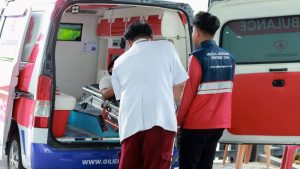
Emotional Reality No One Talks About
Travel guides rarely mention this part.
The emotional layer.
Friends standing confused. Partners trying to stay calm. Staff focused but human.
And in the middle of all that, Gili Islands call ambulance becomes something heavier than language. It becomes memory in motion.
Not fear exactly.
More like awareness.
That things can change fast, even in paradise.
Funny how quickly perception shifts.
One moment: vacation.
Next moment: decisions.
Arrival in Lombok
Once the boat reaches Lombok, mainland ambulance teams usually take over.
Bigger hospitals. More equipment. Faster diagnostics.
And again, coordination continues quietly.
The phrase Gili Islands call ambulance often fades at this point, replaced by hospital processes, paperwork, and treatment plans.
But for those who experienced the transfer, it doesn’t really disappear.
It just changes shape.
Why Everything Feels So Human Here
Despite all the logistics, systems, and coordination, what stands out most is the human behavior.
No one panics unnecessarily. People move with purpose. Even uncertainty feels managed.
And still, Gili Islands call ambulance remains a reminder of how thin the line is between relaxation and emergency on small islands.
Not in a scary way.
More like a quiet truth sitting underneath everything.
You don’t always notice it.
But it’s there.
Final Reflection from the Dock
Standing near the shore, watching boats come and go, you start to understand something subtle.
Island life isn’t just beauty. It’s also adaptation.
Systems built around water, distance, and timing.
And somewhere in that structure, Gili Islands call ambulance represents more than emergency response. It represents connection between isolation and care.
Maybe imperfect.
Maybe weather-dependent.
But real.
And when you think about it long enough, that’s what matters most.
