A dive instructor in Gili Trawangan once joked that visitors ask him hundreds of questions every month.
Where can they see turtles?
Which side of the island has the best sunset?
What’s the best place for dinner?
The one question almost nobody asks on their first day is where they can find medical help.
A few days later, sometimes they do.
That’s the strange thing about travel. Most people spend weeks planning flights, hotels, diving trips, and restaurant reservations. Almost nobody spends five minutes thinking about what happens if they suddenly need a doctor.
Then reality interrupts the holiday.
A child develops a fever after a day in the sun. Someone falls off a bicycle while trying to avoid another rider on a narrow path. A diver notices an unusual symptom several hours after returning from the water and begins wondering whether it is something serious or simply fatigue.
The situation may not be dramatic. In fact, most medical situations aren’t.
What changes is the feeling.
When you’re at home, you know where to go. You know which clinic is nearby. You know which hospital serves your area. On a small island in a different country, those answers are not always obvious.
That’s usually when people start searching for Gili T nearest emergency.
What they’re really looking for is confidence. Confidence that somebody can assess the situation, explain what is happening, and help them figure out what comes next.
A Different Kind of Healthcare Environment
One of the reasons people fall in love with the Gili Islands is because life feels different here.
No cars.
No traffic lights.
And no constant sound of engines in the background.
Visitors move around on bicycles, walk between cafés, and spend long afternoons near the beach without paying much attention to the time.
It’s part of the charm.
The same characteristics that make the islands attractive can make medical situations feel unfamiliar when they occur.
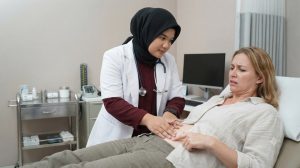
A traveler who develops severe stomach discomfort at home might simply call a taxi and head to a hospital. On Gili Trawangan, the thought process is slightly different.
First comes the question.
Do I actually need medical attention?
Then comes another.
How serious is this?
Most people are not very good at answering those questions themselves.
That’s not criticism. It’s human nature.
A headache after a long day in the sun might be dehydration. It might not. A wound that looks harmless can sometimes become infected. A symptom that sounds alarming after an internet search can turn out to be relatively minor after a proper medical assessment.
The internet is excellent at many things.
Helping anxious travelers self-diagnose is usually not one of them.
A hotel manager on the island once described it perfectly. He said that people often arrive at reception after reading online forums for an hour. By then, they’re usually more worried than when they started.
Most of the time, what they need is not another internet search.
They need a conversation with a medical professional.
That’s where a trusted Gili medical service becomes valuable. Not because every patient is facing a serious emergency, but because someone needs to separate facts from assumptions.
Interestingly, many consultations end with reassurance.
People imagine worst-case scenarios. A doctor performs an assessment. The situation turns out to be manageable.
Those are usually the best outcomes.
What Travelers Often Discover After They Need Help
One misconception about island healthcare is that everything must be basic because the islands themselves are small.
Visitors sometimes arrive with that assumption.
Then they discover that real healthcare needs in a tourism destination are surprisingly varied.
The person sitting in front of a doctor could be a backpacker from Germany, a family from Australia, a diver from France, a digital nomad from Canada, or a retiree spending several months in Southeast Asia.
Their concerns are rarely identical.
One person wants treatment.
Another wants advice.
Someone else needs documentation for insurance purposes.
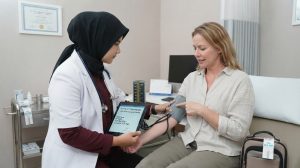
A diver may need medical clearance. A traveler might require a fit-to-fly certificate before changing travel plans.
The practical side of healthcare often surprises people as much as the medical side.
Nobody books a holiday thinking about paperwork.
Yet paperwork somehow finds a way to become important.
Insurance companies ask for reports. Airlines request medical information. Family members back home want updates. A situation that begins with a simple consultation can quickly involve emails, documents, and phone calls across multiple countries.
Healthcare providers working with international travelers understand this reality because they see it regularly.
They know that treating the patient is only part of the process.
Helping someone navigate the situation can be equally important.
Visitors also tend to underestimate how useful local medical knowledge can be.
A doctor working in a destination like Gili Trawangan sees patterns that repeat year after year. Diving concerns. Dehydration. Travel-related illnesses. Minor cycling injuries. Infections that begin as small problems and become larger because someone waited too long before seeking advice.
Experience creates perspective.
That perspective often helps patients make calmer and better decisions.
Another thing people rarely think about before arriving is diagnostic testing.
Nobody travels to a tropical island hoping to need laboratory services. Still, there are moments when additional information becomes valuable.
Symptoms do not always tell the entire story.
Access to a reliable laboratory Gili facility can help healthcare providers understand what is happening rather than relying entirely on assumptions. For patients, that often means greater confidence in the treatment plan and fewer unanswered questions.
The Conversation Nobody Wants To Have
There is one topic that tends to make travelers uncomfortable.
Medical evacuation.
The phrase itself sounds serious.
In truth, most visitors will never need it.
Many healthcare providers go months handling routine medical concerns without encountering a situation that requires complex evacuation planning.
Still, responsible medical teams prepare for those situations because occasionally they happen.
What’s interesting is how different reality looks compared to what people imagine.
Movies tend to portray medical evacuations as dramatic, urgent, and chaotic.
Real life is usually more measured.
Doctors evaluate the patient. Options are discussed. Logistics are considered. Weather conditions may become part of the conversation. Available facilities are reviewed.
The process is less about drama and more about decision-making.
Sometimes a transfer to Lombok is appropriate.
Sometimes a land ambulance becomes part of the plan.
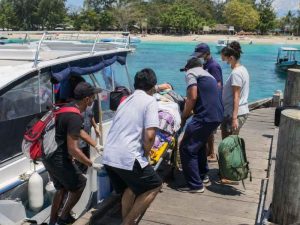
Occasionally, speed boat ambulance coordination is considered.
More complex situations may involve helicopter ambulance or air ambulance arrangements.
The details depend entirely on the patient’s condition.
What never changes is the goal.
Getting the patient to the most appropriate level of care.
Visitors occasionally ask whether there is a 24 hour medical center Gili Trawangan travelers can depend on if something happens late at night.
The question makes sense because medical problems rarely appear at convenient times.
Nobody schedules an illness.
Nobody plans an accident.
Most people simply want to know that help is available if they need it.
That’s ultimately what the search for Gili T nearest emergency is really about.
Not a building.
Not a map location.
And not even a particular service.
It’s about knowing that if a holiday takes an unexpected turn, there are experienced healthcare professionals in Gili Trawangan, Gili Air, and Gili Meno who can help assess the situation, explain the options, coordinate care when necessary, and provide support when travelers are far from home.
Most visitors will never need that support.
But the ones who do are usually very glad they know where to find it.