
I didn’t expect to think about Gili Air medical evacuation on an island like this. You arrive, drop your bag, feel the sand—soft, almost powdery—and suddenly everything feels slow, safe, kind of suspended. But then someone mentions a late-night boat rushing to Lombok, and it hits you… even here, things can turn quickly.
And that thought lingers.
Not in a scary way. Just… real.
Why Gili Air Medical Evacuation Is Something People Rarely Talk About
Most travelers come for the quiet. No engines. No chaos. Just bicycles and the occasional horse cart passing by with that soft, rhythmic clop.
You don’t see hospitals on every corner. That’s obvious.
But what’s less obvious is how the system works when something serious happens. There is a Gili Air clinic center, and it’s actually quite reliable for basic care. Cuts, mild fevers, dehydration—it’s handled.
Still, when things go beyond that, Gili Air medical evacuation becomes the next step. Not dramatic. Just necessary.
And strangely, people don’t talk about it much.
Maybe because it breaks the illusion a little.
A Moment That Changes the Atmosphere
I remember one evening—sky turning orange, the kind of sunset that makes everyone pause—when a small group gathered near the beach path. Not loudly. Just… concerned.
Someone had collapsed.
Within minutes, Gili emergency service was there. Quick, but calm. No shouting. No panic. Just focused movement.
It’s odd how time feels in those moments. Slow and fast at the same time.
They assessed, coordinated with Gili medical service, and then you could sense it—this wasn’t something the island could fully handle.
That’s when Gili Air medical evacuation entered the picture.
How the Process Actually Unfolds
It’s not like calling an ambulance in a city. There’s no siren cutting through traffic.
Here, it starts small.
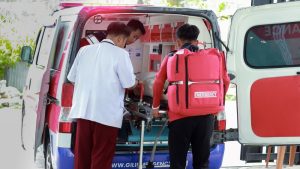
The patient is stabilized at Gili Air clinic center or on-site by Gili medical service staff. Oxygen tanks. Basic monitoring. Someone keeping notes. Someone making calls.
Then decisions.
Always decisions.
If evacuation is needed—and often, it is—arrangements begin almost immediately. Boats are prepared. Contacts on Lombok are alerted. It’s a chain reaction, but a quiet one.
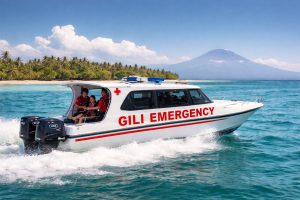
Gili Air medical evacuation usually involves a speedboat transfer. Simple idea. Not always simple in execution.
Especially at night.
Night Transfers Feel Different
There’s something about the sea after dark.
You don’t see much. Just black water and distant lights. The sound of the engine becomes louder, sharper. Wind hits differently.
And yet, Gili Air medical evacuation still happens in those conditions.
It has to.
I once heard a diver describe it—he wasn’t the patient, just nearby—and he said it felt surreal. Like being inside a moment that didn’t quite belong to the calm island vibe everyone talks about.
But it was efficient. That’s what he remembered most.
The Role of Gili Emergency Service (More Important Than It Looks)
You might not notice them at first. Gili emergency service doesn’t stand out in obvious ways.
But they’re there.
And when something goes wrong, they become the center of everything. First contact. First action and first decision point.
They work alongside Gili medical service teams and coordinate closely with the Gili Air clinic center. It’s not a big, flashy system, but it works in a very human way—people relying on each other, step by step.
And that’s what makes Gili Air medical evacuation possible in the first place.
Without that first response, nothing moves.
Situations That Require Immediate Evacuation
Some cases don’t leave room for debate.
Diving accidents, for example. Decompression sickness can escalate quickly, and delays are risky. Really risky.
Heart-related issues. Severe injuries. Sudden infections that spiral.
Even allergic reactions can become urgent here.
In those moments, Gili Air medical evacuation isn’t a backup plan—it’s the plan.
There’s no waiting it out.
It’s Not Just About Distance
People assume the challenge is distance. Island to mainland. Boat to ambulance.
But honestly, it’s more layered than that.
Timing matters. Weather shifts. Communication lines need to stay clear. Everyone involved—from Gili emergency service to hospital staff on Lombok—has to move in sync.
And sometimes, things aren’t perfectly smooth.
That’s just reality.
Still, Gili Air medical evacuation happens often enough that the process feels… practiced. Not perfect, but experienced.
A Short Story That Stays With Me
A traveler I met—quiet guy, maybe in his 40s—once told me about his friend who needed evacuation.
It started with a headache.
Then confusion.
Within an hour, Gili medical service stepped in, followed by a rapid decision for Gili Air medical evacuation. Boat transfer, coordination, everything moving faster than expected.
His friend recovered. Fully.
But what stayed with him wasn’t the fear. It was how quickly strangers became helpers. How systems that seem invisible suddenly became very, very real.
What You Should Probably Do Before Visiting
This isn’t meant to worry you.
Really.
But a little preparation goes a long way. Save the contact for Gili emergency service. Know where the Gili Air clinic center is—just in case.
And if you’re planning to dive or stay for a while, make sure your insurance covers evacuation. Gili Air medical evacuation can be expensive. Boats, staff, transfers—it adds up faster than you’d think.
It’s one of those “hope you never need it” things.
But still.
Better to have it sorted.
The Human Side of It All
What stands out isn’t the logistics.
It’s the people.
The way someone holds a flashlight steady. The way instructions are repeated, just to be sure. The quiet nods between team members who understand what needs to happen next.
Gili Air medical evacuation isn’t just a system—it’s a series of human decisions happening in real time.
Sometimes messy.
Sometimes smooth.
Always important.
Living the Island Life, With Awareness
You can still enjoy everything Gili Air offers. The snorkeling. The sunsets. The slow mornings with coffee that somehow tastes better near the ocean.
That doesn’t change.
If anything, knowing about Gili Air medical evacuation adds a layer of awareness. Not fear. Just understanding.
Life here is simple, yes.
But it’s not disconnected from reality.
Final Thoughts on Gili Air Medical Evacuation
So, here’s the honest part—Gili Air medical evacuation isn’t something you’ll think about every day.
And that’s a good thing.
But it exists. Quietly. Reliably. In the background of an island that feels almost too peaceful at times.
Between Gili emergency service, Gili medical service, and the Gili Air clinic center, there’s a system in place that keeps things moving when it matters most.
Not perfect.
But present.
And sometimes, that’s exactly what you need.
