
The first time I heard someone mention Gili Air sea ambulance, I honestly imagined something dramatic. Sirens. Panic. Maybe waves crashing against a speedboat in the middle of the night. But when you spend enough time around the Gili Islands, you slowly realize how important this service actually is. Quietly important. The kind of thing you hope you never need, yet somehow feel relieved knowing it exists.
Life on Gili Air moves slowly most days. Barefoot travelers cycling under the sun, tiny cafés playing reggae music, salty wind drifting through narrow sandy roads. Beautiful, yes. But islands are islands. Medical emergencies still happen. Sometimes unexpectedly.
And that is exactly why Gili Air sea ambulance matters more than many visitors first assume.
Why Medical Transport on Small Islands Feels Different
On mainland destinations, hospitals are usually just a short drive away. Here? Not really.
Gili Air has charm because it is separated from the noise of bigger cities. No cars. No motorcycles. Mostly bicycles and horse carts. Peaceful. Almost unreal at sunset.
But emergencies do not wait for perfect logistics.
A traveler can suddenly experience dehydration after diving. Someone else may fall from a bike. Chest pain happens too. Panic attacks. Allergic reactions. Things get complicated quickly when the nearest advanced hospital requires crossing the sea.
That’s where Gili Air sea ambulance becomes essential, not optional.
Interesting thing is, many tourists only search for emergency contacts after something bad happens. Human nature, maybe. We assume paradise automatically means safety. Sometimes it does. Sometimes it doesn’t.
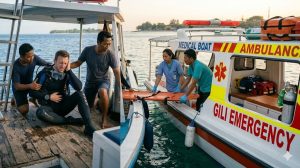
The Connection Between Emergency Service Gili and Tourist Safety
Tourism in the Gilis keeps growing every year, and naturally the need for reliable emergency response grows too. A proper emergency service Gili system is not just about transportation. It’s about response time, coordination, communication, and knowing exactly where to bring patients during critical moments.
And honestly, minutes matter.
Especially at night.
I once heard a story from a diver who developed severe ear barotrauma after a deep dive near Gili Trawangan. At first he thought it was minor discomfort. A few hours later, he could barely stand straight. The local team coordinated transfer support quickly, and that fast action probably prevented worse complications.
Tiny delays feel enormous on islands.
That’s why Gili Air sea ambulance services are becoming part of the island’s invisible infrastructure. Like electricity. Or clean water. You rarely notice it until suddenly you really need it.
What Actually Happens During a Sea Ambulance Transfer?
People often picture chaos. But from what many locals describe, the process is surprisingly organized.
Usually the first step starts with communication through a Gili medical clinic or hotel staff. The medical team evaluates the condition first. If advanced treatment is required, transport to Lombok or another larger medical facility is arranged.
Simple in theory. Stressful in real life.
The boat itself is generally equipped for urgent transport, though the exact equipment depends on the provider and situation. Oxygen support, medical staff, patient stabilization. The sea crossing is not very long, but during emergencies even fifteen minutes can feel strangely endless.
Especially for family members waiting nearby.
And yes, weather matters too. Big waves can complicate transfers. Islanders know this better than anyone.
Still, Gili Air sea ambulance remains one of the fastest solutions available for serious medical situations around the islands.
Gili Medical Service Is More Important Than Most Travelers Think
People prepare sunscreen more carefully than emergency plans.
Funny, right?
Before arriving on Gili Air, many tourists research snorkeling spots, cafés, sunset bars, maybe yoga classes. Very few search for Gili medical service information. It feels unnecessary during vacation planning.
Until someone gets food poisoning at 2 AM.
Or a child develops a fever.
Or a diving accident happens.
Suddenly medical access becomes the only thing anyone cares about.
Reliable Gili medical service providers help bridge the gap between small island limitations and mainland healthcare facilities. They often become the first point of contact before larger evacuations are arranged.
And honestly, having calm medical staff around during stressful moments changes everything psychologically. People panic less when someone competent is guiding them.
That human factor matters a lot.
The Role of Gili Medical Clinic in Emergency Coordination
A good Gili medical clinic does more than treat small injuries.
Many clinics on the island help assess whether patients can remain locally treated or require evacuation. This decision is critical because unnecessary transfers can be expensive and exhausting, while delayed transfers can be dangerous.
There’s a balance.
Sometimes symptoms look harmless at first. Heat exhaustion, for example, can escalate quickly in tropical weather. Divers may underestimate decompression-related symptoms. Travelers often ignore dehydration until they physically cannot continue.
Medical teams see these patterns repeatedly.
Which is why cooperation between Gili medical clinic staff and Gili Air sea ambulance operators becomes incredibly valuable during emergencies.
Not glamorous work. But meaningful.
Night Transfers Feel Different
This deserves its own section because honestly, nighttime emergencies on islands carry a different emotional atmosphere.
The sea becomes darker. Quieter.
You hear waves more clearly.
And people suddenly become very aware of distance.
A nighttime Gili Air sea ambulance transfer can feel surreal for patients and families alike. Yet local responders are often experienced with these conditions. They understand routes, weather shifts, docking challenges, and communication systems better than outsiders ever could.
There’s comfort in that experience.
Even if fear still exists.
Why Travelers Should Save Emergency Contacts Early
Simple advice. But surprisingly useful.
Save emergency numbers before you need them.
Not later.
Write down contact information for local clinics, accommodation staff, and emergency service Gili providers once you arrive on the island. Hopefully you never use them. Still worth doing.
Because during emergencies, people forget basic things. Stress does that.
Phones shake in your hands. Internet becomes slow exactly when you need it most. Friends start talking over each other. Nobody remembers clinic names anymore.
Preparation sounds boring until it becomes important.
Diving Tourism and Medical Readiness
Diving is one of the biggest reasons travelers visit the Gilis. Crystal-clear water, sea turtles, colorful coral reefs. Incredible experience.
But diving also carries risks.
Even experienced divers can face complications from currents, pressure changes, exhaustion, or equipment problems. That’s partly why Gili Air sea ambulance systems remain closely connected to tourism safety discussions around the islands.
Dive operators usually understand emergency procedures well, which helps. Many coordinate directly with local medical teams if situations escalate.
Still, prevention matters most.
Hydration. Rest. Proper dive planning. Listening to instructors.
Basic things. Yet people skip them constantly during holidays.
Island Life Is Beautiful, But Vulnerable
Maybe that’s the strange truth many travelers slowly realize.
Island life feels magical partly because it is fragile.
Resources are limited. Transportation depends on weather. Medical access requires coordination. Communities rely heavily on cooperation and local knowledge.
And somehow that vulnerability makes the islands feel even more human.
Services like Gili Air sea ambulance quietly support that entire ecosystem. Without them, emergencies would become far more dangerous for residents and tourists alike.
Most visitors never think about it while watching sunsets on the beach.
But behind the scenes, emergency systems continue operating. Waiting. Ready if needed.

Small Delays Can Become Big Problems
One thing medical professionals often repeat: early response saves lives.
It sounds obvious. Yet people delay asking for help all the time.
“I’ll wait another hour.”
“Maybe it’s nothing.”
“I don’t want to ruin the trip.”
That mindset can create bigger problems later.
A fast call to a Gili medical clinic or Gili medical service provider is usually smarter than ignoring symptoms. Especially on islands where logistics already require extra time.
And if evacuation becomes necessary, Gili Air sea ambulance coordination works best when action starts early.
Not after conditions worsen dramatically.
The Quiet Reassurance Visitors Rarely Notice
Most tourists visiting Gili Air probably never see a medical evacuation happen.
That’s good.
But knowing emergency systems exist changes the feeling of travel in subtle ways. Families relax more. Divers feel safer. Hotel staff operate more confidently.
There’s reassurance in preparedness.
Even invisible preparedness.
And honestly, maybe that’s the best kind of safety system — the one quietly working in the background while everyone else enjoys the island.
Final Thoughts on Gili Air Sea Ambulance
Traveling to tropical islands always comes with a mix of excitement and unpredictability. That’s part of the charm. Yet behind the beaches, snorkeling trips, and slow island mornings, services like Gili Air sea ambulance play a critical role in keeping visitors and locals protected when emergencies happen unexpectedly.
The combination of emergency service Gili support, trusted Gili medical service teams, and responsive Gili medical clinic coordination creates an important safety network many people only appreciate after facing a difficult moment themselves.
Hopefully you never need it.
But if you do, you’ll probably be grateful it’s there.
