Nobody comes to Gili Trawangan thinking about hospitals.
You arrive thinking about sunsets, salt on your skin, bicycles creaking on sand paths. You think about how slow everything feels. Almost deliberately slow. Like the island made an agreement with time and decided not to rush anymore.
And then—sometimes—something breaks that agreement.
This is where Gili Trawangan Ambulance to Lombok enters the story. Not loudly. Not dramatically. More like a door you didn’t notice before, suddenly becoming very important.
Why Emergencies on Gili Feel… Heavier
On a mainland city street, an emergency blends into noise. Traffic. Sirens. People moving.
On Gili Trawangan, there’s space. Too much space, maybe. When someone collapses or gets injured, everyone notices. There’s a pause. A look around. A moment where reality catches up.
I’ve seen travelers sit on the sand afterward, staring at the sea, quietly shaken—not because of blood or pain, but because they realized how far they were from a real hospital.
That distance is exactly why Gili Trawangan Ambulance to Lombok exists.

Medical Care on the Island: Helpful, But Limited
To be fair, Gili Trawangan isn’t helpless.
There’s a Gili emergency clinic on the island. The doctors and nurses there are experienced, calm, and used to tourists who don’t know how to explain what hurts. They treat infections, dehydration, minor injuries, diving-related issues, and plenty of “I thought it was nothing” cases.
There’s also broader Gili medical service support—medical staff who understand island logistics, boat timing, and how quickly a situation can shift.
But there’s a ceiling. Always has been.
No advanced surgery, no ICU beds, no CT scans humming in the background.
And when a case crosses that invisible line, the conversation changes.
What “Ambulance” Means on a Car-Free Island
Here’s where expectations need adjusting.
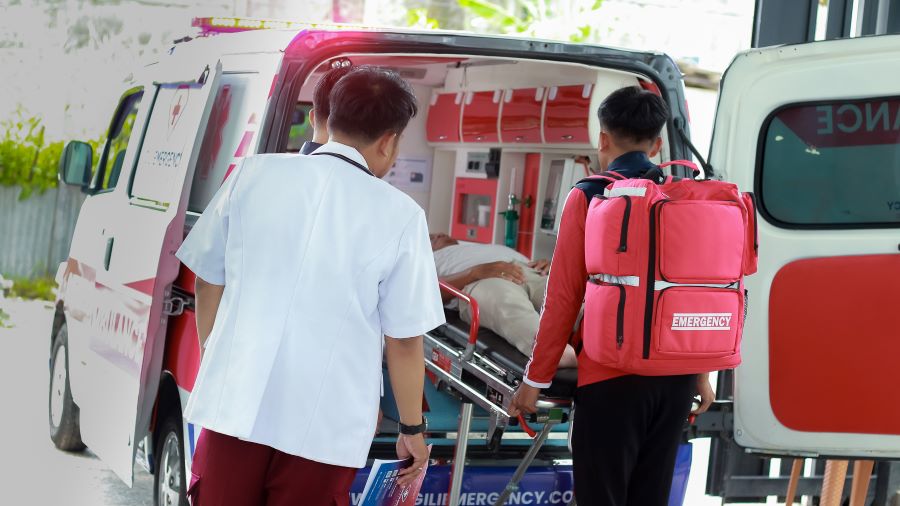
An ambulance Gili is not a van with flashing lights. There are no paved roads to race down. Sometimes it’s a stretcher rolling slowly over sand. Sometimes it’s a cart pulled by a bicycle. And sometimes it’s a speedboat idling offshore, waiting.
This doesn’t mean the system is weak. It means it’s adapted.
Gili Trawangan Ambulance to Lombok is a process, not a vehicle. A chain of decisions. Clinic assessment. Stabilization. Transport. Sea crossing. Mainland handover.
Each step matters. Miss one, and the whole thing feels fragile.
How the Transfer to Lombok Actually Happens
It usually starts quietly.
A patient is examined at a Gili emergency clinic. Vital signs checked. Questions repeated—sometimes twice, sometimes three times. Not because staff are unsure, but because bodies change. Fast.
Then comes a moment of stillness. Someone nods. Someone makes a call.
Lombok.
At that point, Gili Trawangan Ambulance to Lombok becomes real. A boat is arranged. Oxygen tanks checked. Weather considered. Lombok hospitals alerted.
People imagine urgency means chaos. In reality, it’s controlled calm. Efficient, but not rushed. There’s a difference.

Why Lombok Is the First Choice
People often ask—sometimes half-joking, sometimes serious—why not Bali?
Distance.
Lombok is close enough to matter. Hospitals there can handle trauma, surgery, and serious internal conditions. For many cases, getting to Lombok quickly through Gili Trawangan Ambulance to Lombok can be the difference between early treatment and delayed complications.
Time doesn’t always scream. Sometimes it just slips away.
Those Small Pauses No One Mentions
Here’s an uncomfortable truth.
There are pauses. Waiting moments. A nurse adjusting a strap. Someone checking the horizon. A quiet discussion about waves.
These moments can feel inefficient. Like time is being wasted.
But they aren’t mistakes. They’re calculations. Real-world ones. The kind you can’t automate.
The Gili medical service teams know when to move fast—and when moving fast would be careless.
Hearing the Same Advice Twice (And Needing It)
You might hear this more than once:
“This needs to go to Lombok.”
First from a doctor. Then from a nurse. Then from someone coordinating the boat.
It can feel repetitive. Almost annoying.
But repetition helps reality sink in. Especially when fear is loud. Especially when denial feels comforting.
That’s another quiet role of Gili Trawangan Ambulance to Lombok—not just transport, but confirmation.
The Emotional Weight of Leaving the Island This Way
Leaving Gili Trawangan is usually joyful. Bags. Hugs. Last swims.
Leaving by ambulance Gili feels different.
There’s fear. Vulnerability. Sometimes guilt—“Did I do something wrong?” Sometimes embarrassment. Sometimes anger at your own body.
Medical staff know this. They don’t rush emotions. They let silence exist.
A blanket placed gently. A calm explanation repeated again. These details matter more than people realize.

Costs, Hesitation, and Awkward Questions
Let’s be honest.
People hesitate. They ask about money. Insurance. Whether waiting is an option.
This doesn’t mean they’re careless. It means they’re human.
Gili medical service teams don’t shame hesitation. They explain consequences, they outline risks and they don’t promise miracles.
Sometimes, hearing the same explanation framed slightly differently helps clarity land.
Why Preparation Is a Quiet Form of Respect
No one plans to need Gili Trawangan Ambulance to Lombok. But preparation is a kind of respect—for yourself and for the people who might have to help you.
Travel insurance. Basic health disclosure. Knowing where the Gili emergency clinic is located.
These aren’t dramatic steps. Just small ones that reduce friction later.
A Thought Worth Sitting With
Gili Trawangan teaches you to slow down. To notice. To feel present.
Medical emergencies interrupt that lesson. Abruptly.
Yet the island responds in its own way. Without sirens. Without roads. With boats, coordination, and people who understand both medicine and sea conditions.
Gili Trawangan Ambulance to Lombok isn’t perfect. It doesn’t need to be. It just needs to work when things go wrong.
And it does.
Sometimes quietly. Sometimes imperfectly. But with intention.
You may never need it. Hopefully, you won’t.
But knowing it exists—knowing there’s a way off the island when your body demands more—changes how safe Gili Trawangan feels.
Paradise, after all, isn’t about perfection.
It’s about having a way back when things break.