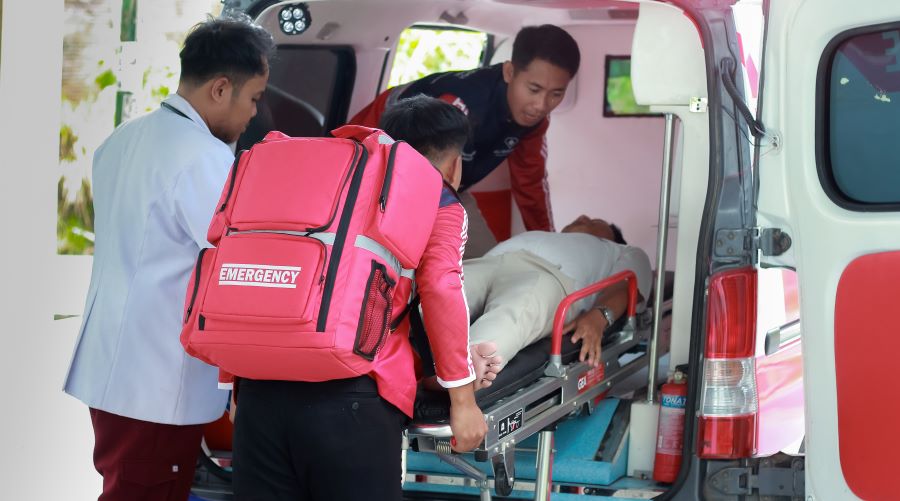
You don’t think about a Gili Trawangan ambulance when you first arrive. Honestly, who does? You step onto the sand, feel that warm breeze, hear nothing but waves and maybe a bicycle bell passing by. It feels… far from problems. Almost unreal.
But then, maybe on your second day, or third, that small thought appears.
“What if something happens here?”
It’s a quiet question. But it stays.
A Car-Free Island Changes Everything
Gili Trawangan is known for one thing that surprises almost everyone: no cars. No motorbikes either. Just bicycles, walking paths, and the occasional horse cart.
At first, it feels peaceful.
Then you realize—this also means no typical emergency vehicles.
So how does an ambulance Gili Trawangan system even work?
Well… not like you expect.
The Gili Trawangan ambulance exists, but it doesn’t scream through traffic with sirens. There’s no traffic to begin with. Instead, it moves along sandy paths, weaving through people, sometimes slowly, sometimes with urgency that you can feel more than hear.
It’s subtle. Almost too subtle.
The First Time You See It
I remember this clearly. Late afternoon. The sky turning orange, people heading back from the beach, a bit tired, a bit sunburned.
Then something passed by.
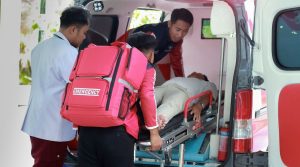
At first glance, just another electric cart. But then you notice the stretcher. The way people step aside quickly. The slightly tense faces.
That was the Gili Trawangan ambulance.
No loud noise. No flashing chaos. Just quiet efficiency.
Strange, right?

How the Gili Emergency Service Actually Works
The Gili emergency service is not built on big systems or advanced infrastructure. It’s built on coordination. And people who know what they’re doing, even with limited tools.
There are small facilities across the island, usually referred to as Gili medical clinic spots. They’re not large hospitals, but they handle more than you’d expect.
Cuts. Fever. Dehydration. Even diving incidents.
And when something more serious happens, the Gili Trawangan ambulance becomes part of a bigger chain.
Pick-up. Stabilization. Transfer.
Sometimes to another clinic. Sometimes to the harbor. And if needed, across the water to Lombok.
It sounds simple when you say it fast.
But in reality, it’s a bit messy. A bit unpredictable. And somehow… it still works.
Not Your Standard Ambulance
Let’s just say it directly—if you’re expecting a modern ambulance like in big cities, you might be surprised.
The ambulance Gili Trawangan setup is often:
Electric carts modified with basic medical support.
Sometimes even horse-drawn carriages adapted for emergencies.
Yeah. Really.
And yet, when you see it in action, it doesn’t feel primitive. It feels… adapted. Like the island shaped it this way.
Because it had to.
A Small Detail People Notice
There’s no siren most of the time.
Instead, there’s awareness.
People move aside quickly. Locals understand immediately. Tourists follow.
It’s almost like an unspoken rule.
The Role of Gili Medical Clinic Facilities
Gili medical clinic services are more important than most visitors realize.
They’re everywhere, but also easy to miss if you’re not looking.
Inside, it’s usually simple. Clean beds. Basic equipment. Staff who are used to handling travelers from all over the world.
They deal with things like:
Food poisoning (quite common, honestly).
Sun exhaustion.
Minor injuries from cycling or snorkeling.
And sometimes, more serious situations.
When that happens, coordination with the Gili Trawangan ambulance is immediate.
No delays if they can help it.
When Things Get Serious
This is where reality sets in.
Because while the Gili emergency service is reliable, it does have limits.
There’s no large hospital on the island. So for critical cases, patients need to be transferred to Lombok.
And that means boats.
Now imagine this: it’s night. The sea is a bit rough. The wind picks up. Time matters.
That’s when the system is tested.
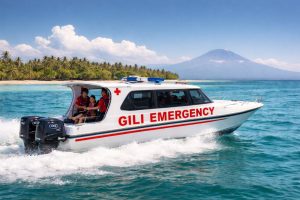
The Gili Trawangan ambulance takes the patient to the harbor. From there, arrangements are made quickly—speedboats, coordination with hospitals on the mainland.
It’s not always smooth.
But it moves.
And in those moments, every second feels louder.
A Story You Might Hear From Locals
Someone once told me about a diver who surfaced too quickly. At first, nothing seemed wrong. Just a bit dizzy.
Then it got worse.
The Gili emergency service was called. The Gili Trawangan ambulance arrived—not instantly, but fast enough. People cleared the path without being told.
At the Gili medical clinic, they recognized the symptoms.
Decompression sickness.
That’s serious.
Within a short time, the patient was on the way to Lombok, where proper facilities were available.
Later, he recovered.
And everyone just… went back to normal.
That’s the strange part. Life continues so quickly here.
The Challenges No One Talks About
It’s easy to romanticize island life.
But emergency response here isn’t easy.
Sand slows everything down.
Weather changes plans.
Resources are limited.
And yet, the Gili Trawangan ambulance keeps operating within those limits.
Maybe not perfectly.
But consistently.
There’s a difference.
Why Knowing This Matters (Even If You Never Need It)
Most travelers won’t use the Gili emergency service.
Hopefully, you won’t either.
But knowing it exists—and understanding how it works—changes how you experience the island.
You feel… grounded.
Not anxious. Just aware.
And awareness, in a place like this, is underrated.
Simple Awareness Goes a Long Way
You don’t need to overthink it.
Just remember:
Where the nearest Gili medical clinic is.
How to contact emergency help.
Listen to your body, especially under the sun.
Basic things. But useful.
The Human Side of It All
If there’s one thing that stands out, it’s this—the system feels human.
Not mechanical. Not distant.
The Gili emergency service depends heavily on people. Locals who respond quickly. Staff who adapt. Even tourists who step aside or help without hesitation.
And the Gili Trawangan ambulance, in all its simplicity, reflects that.
It’s not about being perfect.
It’s about being present.
Final Thoughts on Gili Trawangan Ambulance
The Gili Trawangan ambulance is not something you notice right away. It’s not designed to stand out.
But it’s there.
Working quietly in the background of an island that feels almost too relaxed to need it.
And maybe that’s why it matters.
Because when something does happen—and sometimes it does—you realize there’s a system in place. A different kind of system. Slower, maybe. Simpler. But real.
So while you’re enjoying sunsets, cycling around the island, or just lying on the beach doing nothing at all… there’s a small layer of safety beneath it.
Unseen, but present.
And somehow, that’s enough.