
You probably don’t think about emergencies when you picture a tropical island. White sand, slow mornings, salt in the air. But the truth is, even paradise needs a plan B. That’s where Gili Meno Island ambulance quietly becomes one of the most important things on the island—something you hope you never need, yet feel strangely comforted knowing it exists.
It’s not loud. Not dramatic. But it matters.
And honestly, once you notice it, you start seeing the island differently.
Why Gili Meno Needs Its Own Ambulance System
Gili Meno isn’t like a city. No cars, no traffic lights and no rush hours. Just bicycles, horses, and bare feet pressing into warm sand. Sounds peaceful, right?
It is.
But imagine someone faints. Or gets injured diving. Or worse.
That’s when the Gili Meno Island ambulance becomes essential—not optional.
Because geography changes everything.
There are no highways here. No quick hospital access within minutes. The nearest fully equipped hospital is on Lombok, which requires coordination, boats, and time. Time that, in emergencies, feels painfully slow.
So the ambulance Gili Meno system is designed differently. It’s adapted. Flexible. A little unconventional, maybe.
And it works.
What Does an Island Ambulance Even Look Like?
Not what you expect.
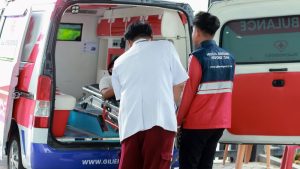
Forget the typical image of a big white van with sirens echoing through crowded streets. Here, the Gili Meno Island ambulance might be a modified cart, sometimes even a horse-drawn cidomo adapted for medical transport.
Yes, really.
It sounds simple, almost too simple. But it’s practical.
The paths are narrow. Sandy. Uneven. A standard vehicle wouldn’t even get far. So the system adjusts to the environment instead of fighting it.
Sometimes, there’s a small motorized unit. Sometimes it’s more traditional. But the goal stays the same: get the patient to a safer place, fast enough.
Not perfect. But functional.
And on an island like this, that’s everything.

The Role of Gili Emergency Service
Behind the scenes, the Gili emergency service is doing more than most visitors realize. They’re not just responding to calls—they’re coordinating logistics in a place where logistics can get… complicated.
Water transport. Weather conditions. Communication gaps.
It’s a lot.
And yet, somehow, it flows.
You might not hear sirens often here. But that doesn’t mean emergencies don’t happen. They do. Quietly, sometimes out of sight. And when they do, the Gili Meno Island ambulance becomes part of a larger response network involving local responders, boat operators, and nearby medical facilities.
It’s teamwork, island-style.
From Beach to Clinic: The First Critical Step
Let’s say something happens.
Maybe a tourist slips on coral. Or someone has a severe allergic reaction. The first stop is usually a Gili medical clinic. These clinics are small but surprisingly capable. They handle first aid, stabilization, and initial diagnosis.
But they’re not hospitals.
Which means if the situation is serious, the process doesn’t stop there.
The Gili Meno Island ambulance transports the patient to a transfer point—often a dock—where a boat ambulance might take over. From there, it’s a trip to Lombok.
It sounds like a lot. Because it is.
But when it works smoothly, it feels almost seamless.
Almost.
Speed vs Reality: How Fast Is Fast on an Island?
Let’s be honest for a second.
Speed here is different.
In a city, you expect an ambulance in minutes. On Gili Meno? It depends. Distance is short, yes, but terrain slows everything down. Sand isn’t exactly friendly to wheels.
Still, the Gili Meno Island ambulance response is surprisingly efficient given the conditions.
People know the island well. Shortcuts exist. Communication is quick—often through local networks rather than formal systems.
And sometimes, speed is about readiness, not just movement.
They’re ready.
Stories You Don’t Hear (But Matter Anyway)
There’s something interesting about island emergencies.
They rarely make headlines.
A traveler with heat exhaustion. A diver with ear barotrauma. A child with a high fever at night. Small things, maybe. Until they’re not.
And in those moments, the Gili Meno Island ambulance becomes deeply personal.
It’s not just a service. It’s a relief.
You see the staff arrive—calm, focused, maybe a bit sweaty from the heat—and suddenly everything feels… manageable.
Even if it wasn’t before.
Challenges the System Quietly Faces
It’s not all smooth sailing. Not even close.
Weather can delay transfers. Rough seas make boat evacuation risky. Limited equipment can restrict treatment options. And sometimes, communication between island and mainland isn’t perfect.
That’s the reality.
The Gili Meno Island ambulance operates within these limits every single day.
And still shows up.
There’s something quietly admirable about that.
How Tourists Can Stay Prepared
Here’s the thing—most visitors don’t think about emergency services before arriving. And maybe that’s fair. You’re here to relax, not worry.
But a little awareness goes a long way.
Know where the nearest Gili medical clinic is. Save emergency contact numbers. Understand that the Gili emergency service may operate differently than what you’re used to.
Not worse. Just different.
And honestly, that small shift in mindset can make a big difference if something unexpected happens.
A System Built on Community
What makes the Gili Meno Island ambulance system unique isn’t just the equipment or the logistics.
It’s the people.
Locals helping locals. Business owners assisting during emergencies. Boat crews ready at odd hours. There’s a sense of shared responsibility that feels… rare.
You notice it.
And maybe you don’t fully appreciate it until you need it. But it’s there.
Always.
Is It Enough? A Honest Reflection
This is a tricky question.
Is the system perfect? No.
Is it enough? Most of the time, yes.
The Gili Meno Island ambulance fills a critical gap in a place where traditional infrastructure simply doesn’t fit. It adapts, evolves, and relies heavily on human connection.
Could it be improved? Of course.
More equipment. Faster transport options. Better integration with mainland hospitals.
But even as it is now, it works in a way that feels… grounded. Real.
The Quiet Comfort You Carry With You
You might arrive on Gili Meno thinking only about sunsets and snorkeling spots. And you should. That’s part of the magic.
But somewhere in the background, there’s a system watching out for you.
The Gili Meno Island ambulance.
You probably won’t see it. Or need it. And hopefully, you won’t.
But knowing it exists changes something.
Just a little.
It makes the island feel safer. More complete. Like even in its simplicity, it’s prepared for the unexpected.
And maybe that’s what true comfort feels like—not the absence of risk, but the presence of care.
Even in the quietest places.
