
The first time I heard someone mention Gili Meno ambulance to Lombok, I honestly paused for a second. Not because the phrase was complicated, but because it suddenly reminded me how different island life can be. Beautiful beaches, quiet nights, slow mornings… yes. But emergencies? That’s another story entirely. When someone on a small island needs urgent treatment, the reality is simple: they often have to cross the sea to reach a proper hospital. And that’s where systems like ambulance Gili, the local Gili emergency service, and specialized Gili medical teams quietly become lifesavers.
You don’t really think about it while sipping coconut water under palm trees.
Until something happens.
And then, suddenly, the ocean between islands feels… much wider.
Why Medical Transfers From Gili Meno Matter
Gili Meno is tiny. Peaceful, yes. Almost dreamlike at sunset. But healthcare facilities there are limited, which is completely understandable for an island of that size.
There are small clinics and trained medical staff, part of the growing Gili medical network that supports locals and tourists. Minor injuries, dehydration, mild infections — those things can be handled.
Serious emergencies?
That’s when the plan changes.
Doctors might quickly recommend a transfer to Lombok, where hospitals have more advanced equipment, specialists, and emergency rooms ready at all hours. In situations like this, the system known as Gili Meno ambulance to Lombok becomes essential.
It’s not just transportation.
It’s a bridge between a small island clinic and a full hospital.
And sometimes, honestly, that bridge makes all the difference.
The Geography Problem (It’s Beautiful… But Complicated)
Here’s the thing many travelers don’t realize.
Gili Meno doesn’t have cars. No big roads either. Most transportation happens on foot, bicycles, or small horse carts called cidomo.
Charming? Absolutely.
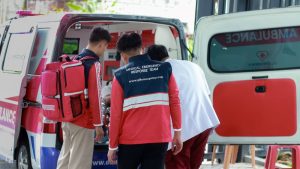
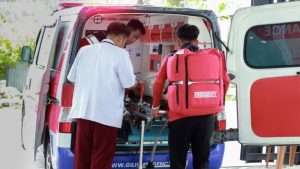
But during a medical emergency, that means the first step is getting the patient from wherever they are to a medical point or harbor quickly. That’s where the ambulance Gili teams come in. They coordinate the ground transfer — or island transfer, technically — to reach the departure point.
Once there, the sea ambulance takes over.
And yes, the system is more organized than you might expect.
How the Gili Meno Ambulance to Lombok Process Works
Let’s imagine a realistic situation.
A diver experiences severe decompression symptoms. Or maybe a tourist suffers a serious injury after a fall. Sometimes it’s a heart condition. It varies.
The local clinic evaluates the patient first.
If advanced care is needed, the call goes out through the Gili emergency service network. Within minutes, coordination begins for a Gili Meno ambulance to Lombok transfer.
Step by step, usually something like this:
First, stabilization.
Medical staff from the Gili medical team check vital signs and prepare the patient.
Then transport to the harbor.
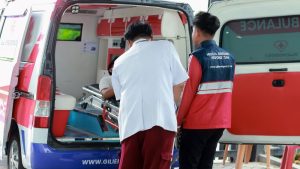
This may involve a small ambulance vehicle or adapted transport system depending on the location.
Next comes the sea ambulance.
These boats are not just regular speedboats. They’re equipped with medical equipment, oxygen support, and trained personnel. The goal is simple: keep the patient stable while crossing the water.
Because the trip to Lombok, depending on conditions, usually takes around 15–25 minutes.
Not long.
But in emergencies, every minute matters.
The Boat Ride That Can Save a Life
I once spoke to someone who witnessed a transfer like this.
He described the moment vividly.
Nighttime. Quiet harbor. The soft glow of boat lights reflecting on the water.
Then suddenly, movement everywhere.
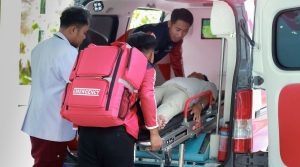
Medical staff preparing equipment. The boat engine warming up. A patient carefully moved onto a stretcher.
And within minutes, the Gili Meno ambulance to Lombok boat pushed away from the dock.
Fast.
Straight across the dark sea.
No drama. Just efficiency.
It’s strange how calm these moments can feel from the outside.
Inside the boat though? Different story.
Medical staff monitor oxygen, heart rate, breathing — all while the boat cuts through waves toward Lombok. This is where the professionalism of the Gili emergency service really shows. They train specifically for situations like this.
And thankfully, most transfers go smoothly.
Hospitals in Lombok: The Destination
Once the boat reaches Lombok, another ambulance is already waiting.
This part is carefully coordinated.
The patient is transferred immediately and driven to one of Lombok’s larger hospitals — often in Mataram or nearby medical centers equipped for trauma care, surgery, or intensive treatment.
That entire chain — from island clinic to hospital — depends on the reliability of the Gili Meno ambulance to Lombok system.
Without it, access to emergency healthcare would be far more complicated for residents and visitors alike.
And considering how many tourists visit the Gili islands each year… well, the importance becomes obvious.
Who Operates the Service?
Many people assume it’s just a private speedboat.
It’s not.
The service usually involves collaboration between clinics, private emergency providers, local authorities, and the broader Gili medical network.
These teams coordinate:
• Emergency calls
• Medical stabilization
• Sea ambulance transport
• Hospital communication
In other words, it’s a full emergency chain.
The ambulance Gili teams are often the first responders on the island itself. They assess the situation quickly and determine whether evacuation is required.
If it is, the next available Gili Meno ambulance to Lombok transfer is arranged immediately.
Speed matters.
But so does preparation.
When Do People Usually Need a Transfer?
Interestingly, not all emergencies are dramatic accidents.
Sometimes it’s dehydration that escalates quickly.
Other times it’s food poisoning that becomes severe. Or a diving incident — decompression sickness can require rapid treatment in a hyperbaric chamber, which Lombok hospitals may provide.
I’ve even heard of cases involving allergic reactions.
Things escalate quickly on small islands.
Which is why the Gili Meno ambulance to Lombok service exists in the first place.
Better to move fast than regret waiting.
Tourists Rarely Think About It
And honestly, why would they?
Most visitors arrive in Gili Meno thinking about snorkeling, sunsets, and beach cafes. Medical logistics are… pretty far down the list.
Yet behind the scenes, systems like Gili Meno ambulance to Lombok are quietly operating every day.
Ready.
Prepared.
Just in case.
It’s a strange contrast — paradise above water, emergency readiness below the surface.
But maybe that’s the hidden backbone of island tourism.
Safety.
What Makes the System Work Well
A few key things make the service effective.
First, coordination.
The Gili emergency service network communicates quickly between clinics, boat operators, and Lombok hospitals.
Second, experience.
Medical teams working in Gili medical services deal with island emergencies regularly. They know the timing, the weather patterns, the fastest routes across the water.
Third, availability.
The Gili Meno ambulance to Lombok system operates day and night, because emergencies don’t follow office hours.
Storms can slow things down occasionally, of course. The sea isn’t always cooperative.
But overall, the system is surprisingly reliable.
A Quiet Safety Net for Island Life
You could spend weeks in Gili Meno and never see it happen.
No sirens. No flashing lights.
Just a quiet harbor and the sound of waves.
But somewhere in the background, the Gili Meno ambulance to Lombok system is always ready — connecting a peaceful island to life-saving care across the water.
And maybe that’s the comforting part.
Island life may feel remote, but it’s not isolated.
Help is just one boat ride away.