When people picture paradise, they imagine turquoise water, soft sand, bicycles instead of cars, and sunsets that feel almost unreal. What most travelers don’t picture—until they suddenly have to—is the Gili Islands 24 hour ambulance.
And yet, quietly, consistently, day and night, it’s there.
Because as magical as Gili Trawangan, Gili Air, and Gili Meno feel… life still happens. Accidents happen. Dehydration happens. Unexpected fevers. Diving incidents. A wrong step on coral. A motorbike tumble before you even realize you pressed the brake too hard.
That’s when the calm rhythm of island life shifts.
And you’re suddenly very, very grateful for a reliable Gili Islands 24 hour ambulance.
Why the Gili Islands 24 Hour Ambulance Matters More Than You Think
Let’s be honest. Most people don’t research medical support before booking a beach holiday. They look at villa photos. Snorkeling spots. Beach clubs. Reviews about breakfast pancakes.
Emergency infrastructure? Rarely.
But the Gili Islands are unique. There are no cars. No large public hospitals on the islands themselves. Transportation between islands depends on boats. At night, the sea can feel darker, heavier, less forgiving.
That’s why the Gili Islands 24 hour ambulance isn’t just a vehicle—it’s an adaptive emergency service system designed specifically for island conditions.
Instead of standard road ambulances like in big cities, the system integrates:
-
On-island transport (often modified vehicles or carts)
-
Coordination with Gili emergency clinic facilities
-
Fast boat transfers to Lombok or Bali when required
-
Direct communication with regional hospitals
It’s not flashy. It’s practical. Responsive. And designed for reality.
You might not think about it while sipping coconut water. But knowing it exists? That shifts something internally. A subtle sense of safety.
What Actually Happens During an Emergency on Gili
Picture this.
You’re snorkeling. The water is warm. Sunlight ripples across the sand below. Then suddenly—you feel dizzy. Your heart races. You swallow seawater.
Panic tries to creep in.
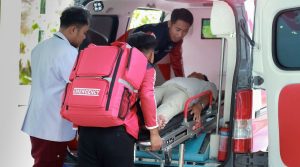
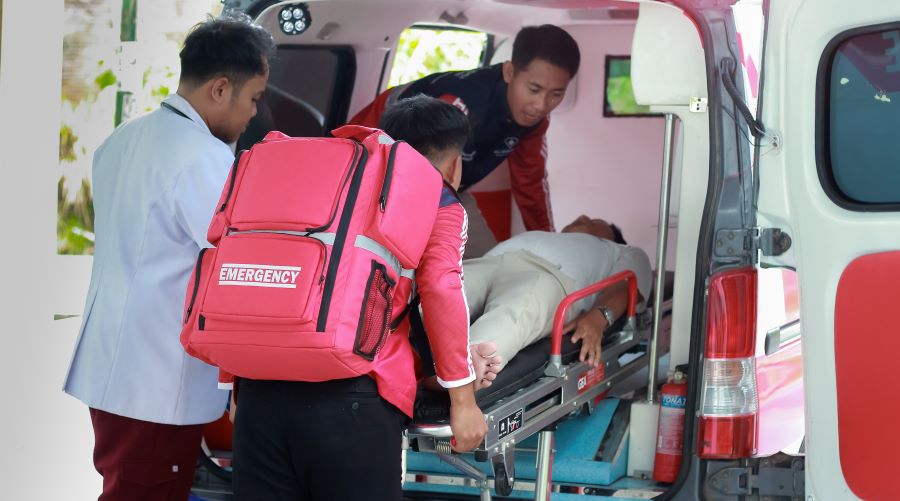
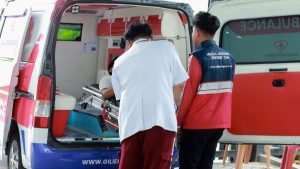
This is where the Gili Islands 24 hour ambulance system activates through the local emergency service hotline. Staff trained in rapid response assess the situation quickly. In many cases, they coordinate with the nearest Gili emergency clinic to stabilize the patient before any transfer.
Sometimes the issue is minor: dehydration, food poisoning, mild injuries. Other times, it requires escalation.
Here’s something people don’t realize: speed is relative on islands. There are no traffic jams—but there are logistical layers. The Gili emergency service must evaluate whether treatment can be handled locally or if evacuation to Lombok’s larger hospital is necessary.
And those decisions? They matter.
Because overreacting wastes time. Underreacting risks lives.
That balance—experience plus local knowledge—is what makes the Gili Islands 24 hour ambulance system so critical.
Inside the Gili Emergency Clinic Network
Now let’s zoom in a bit.
Each island has access to medical facilities, commonly referred to as Gili emergency clinic centers. These clinics provide:
-
Initial trauma response
-
IV fluids and rehydration therapy
-
Basic imaging or diagnostics (depending on facility)
-
Minor surgical procedures
-
Oxygen therapy
They are not full-scale hospitals. And they don’t pretend to be.
But paired with the Gili Islands 24 hour ambulance coordination, they become the first stabilizing link in a larger chain. That chain extends to Lombok’s hospitals and, if necessary, to Bali.
It’s layered care. Island-adapted care.
I once spoke with a dive instructor who described how quickly things can change underwater. One minute a diver is fine; the next, there’s a suspected decompression issue. In those moments, the existence of a Gili emergency service protocol isn’t theoretical—it’s operational.
And that’s the difference.
Not Just for Tourists: The Hidden Backbone for Locals
Here’s something easy to overlook.
The Gili Islands 24 hour ambulance doesn’t only serve tourists. It serves local families. Children. Elderly residents. Workers in hospitality. Boat crews. Dive guides.
Island life is beautiful—but physically demanding. Construction work under tropical heat. Fishing at night. Transporting goods between islands.
When emergencies happen at 2 a.m., the same Gili emergency service responds.
No spotlight. No applause.
Just quiet professionalism.
And perhaps that’s why the system works—it’s built for community first, tourism second. Or maybe it’s the other way around sometimes. It depends. But the integration benefits everyone.
Sea Transfers: The Part People Don’t Talk About
Let’s pause here.
Because this part feels cinematic until it’s real.
If a patient requires advanced hospital treatment, the Gili Islands 24 hour ambulance coordination includes boat evacuation. That means:
-
Night-time sea crossings
-
Coordination with Lombok hospitals
-
Monitoring vital signs during transfer
-
Medical staff onboard
The sea at night is different. Dark. Wide. Sometimes calm, sometimes restless. The logistics of moving a patient safely across water demand preparation and experience.
This is where island emergency service design shows its strength. It’s not simply about having an ambulance—it’s about having an adaptable response chain.
And yes, weather sometimes complicates things. That’s reality. But planning anticipates that reality.
Common Situations That Trigger Gili Emergency Service Calls
You might be surprised how varied emergency calls are. They’re not always dramatic.
Some of the most frequent cases handled through the Gili Islands 24 hour ambulance include:
-
Severe dehydration
-
Heat exhaustion
-
Alcohol-related incidents
-
Motorbike or bicycle falls
-
Snorkeling or diving injuries
-
Allergic reactions
-
Gastrointestinal infections
Simple things, often.
Yet on an island, “simple” can escalate quickly without timely intervention.
That’s why having a reliable Gili emergency clinic and coordinated ambulance response matters even for what seems minor at first.
Because sometimes it isn’t minor. And sometimes early treatment prevents something worse.
What Makes the Gili Islands 24 Hour Ambulance Different
Let’s step back.
In major cities, emergency response is about speed through traffic. On Gili, it’s about coordination through geography.
No cars. Limited roads. Boat logistics. Communication between islands. International patients with different insurance systems.
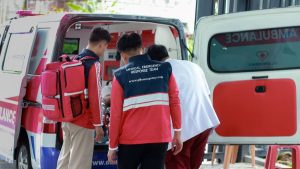
The Gili Islands 24 hour ambulance operates within these constraints—but doesn’t feel constrained.
It feels adapted.
There’s something reassuring about that. It tells you the system wasn’t copied and pasted. It was shaped by necessity.
And when systems are shaped by real conditions, they tend to work better.
A Small Story That Stays With You
A traveler once fainted at sunset on Gili Air. Heat, dehydration, maybe too little food. The beach was glowing orange. Music played softly from a nearby café.
Within minutes, local responders arrived. Calm voices. Gentle efficiency. Transport to a Gili emergency clinic. IV fluids. Monitoring.
By midnight, the traveler was stable.
The next morning? Embarrassed, maybe. But safe.
It wasn’t dramatic. No sirens echoing across skyscrapers. Just quiet competence.
That’s often how the Gili Islands 24 hour ambulance operates. Not dramatic. Not loud. Effective.
And honestly… that’s what you want.
Why Preparation Is Still Your Responsibility
Even with a strong Gili emergency service system, travelers carry responsibility too.
Travel insurance. Hydration. Respecting diving limits. Wearing helmets. Listening to your body.
The Gili Islands 24 hour ambulance is a safety net—not a replacement for caution.
And yet, knowing that net exists allows you to relax just a little deeper. To enjoy the sea without a subtle edge of anxiety.
Safety doesn’t remove adventure. It supports it.
Peace of Mind in Paradise
Let’s circle back to the beginning.
Paradise feels better when it’s secure.
The Gili Islands 24 hour ambulance may not appear in Instagram captions. It doesn’t trend on travel reels. But it is part of what makes extended stays, diving trips, and family holidays viable.
Because behind every smooth vacation experience is infrastructure. Invisible until needed.
The emergency service network, the Gili emergency clinic teams, the boat transfer coordination—they create a foundation of trust.
And trust allows you to breathe fully.
So yes, you’ll come for the coral reefs. The cycling paths. The sunset swings.
But somewhere in the background, the Gili Islands 24 hour ambulance stands ready—steady, prepared, responsive.
You hope you never dial the number.
Yet if you ever do… you’ll be grateful it exists.