
I didn’t plan to think about emergencies when I first heard about the Gili Islands island ambulance. Honestly, who does? You come to the Gilis for turquoise water, slow mornings, maybe a bit of snorkeling. Not… ambulances. But that’s the thing. Life doesn’t pause just because you’re on an island.
And somehow, quietly, almost invisibly, this system exists to catch you when things go wrong.
A Place Without Cars… So What Happens in Emergencies?
No cars. No scooters. Just bicycles and the occasional horse cart.
It sounds idyllic. And it is. Most of the time.
But then a question creeps in—what happens if someone gets seriously hurt?
That’s where the Gili Islands island ambulance starts to make sense. It’s not flashy, not high-tech, but it’s designed for exactly this environment. Narrow sandy paths, unpredictable terrain, and a community that moves at its own rhythm.
Sometimes slower. Sometimes urgently fast.
The First Time You Actually Notice It
You might not see it right away.
Days pass. Beach. Food. Sleep.
Then one afternoon, maybe near sunset, you hear a bit of commotion. People stepping aside. A cart moving with purpose. Not rushed in a chaotic way, but focused.
That’s often your first glimpse of the Gili Islands island ambulance.
And it’s oddly reassuring.
A Different Kind of Ambulance Gili Experience
Let’s be real—it doesn’t look like the ambulances you’re used to.
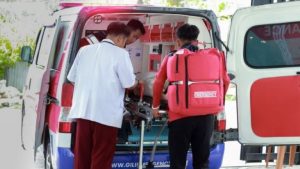
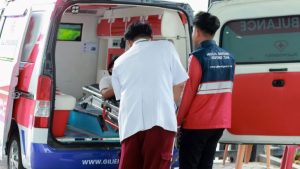
The ambulance Gili setup feels… improvised at first glance. Smaller vehicles, sometimes electric carts, sometimes adapted traditional transport. No dramatic sirens echoing through streets.
But spend a minute watching it work, and you’ll realize something.
It fits.
Perfectly, actually.
Gili Emergency Service: Quiet but Reliable
You don’t see coordination. You feel it.
The Gili emergency service operates in a way that’s less about rigid systems and more about responsiveness. Someone calls. Word spreads quickly. Help moves.
It’s not chaotic, though it might look that way to outsiders.
It’s… organic.
And maybe that’s why it works.
Because in a place like this, strict systems can break. But adaptable ones? They bend, adjust, keep going.
Inside a Gili Medical Clinic
Step into a Gili medical clinic and you’ll notice something immediately.
It’s simple.
Not bare, but not overly clinical either. There’s usually a desk, a bed, some essential equipment. The kind of place where practicality matters more than appearance.
Fans spinning slowly overhead.
A faint smell of antiseptic.
Voices low, calm.
The Gili Islands island ambulance often brings patients here first. It’s the initial checkpoint. Stabilize, assess, decide what comes next.
And honestly, in many cases, that’s enough.
When the Situation Escalates
Of course, not everything can be handled locally.
Serious cases need more advanced care. That’s when things get… complicated.
Boats come into the picture.
Transfers to Lombok or Bali.
Timing becomes critical—tides, weather, availability.
The Gili Islands island ambulance plays a key role here, connecting the dots from incident to evacuation. It’s not just about transport anymore. It’s coordination, communication, sometimes even improvisation.
And yes, sometimes waiting.
That part can feel long.
A Moment That Changes Your Perspective
There was a story I heard—nothing dramatic at first.
A woman cycling around Gili Air. Relaxed, taking photos, enjoying the breeze. Then she fell. Hard enough to need help, but not immediately alarming.
Still, people reacted quickly.
Within minutes, the Gili Islands island ambulance arrived. No panic. Just efficiency.
She was taken to a Gili medical clinic, checked, treated.
Later she laughed it off. Said she was embarrassed more than anything.
But she also said something else: “I didn’t expect it to be this organized.”
That’s the part that lingers.
The People Behind the System
It’s easy to focus on the “ambulance” itself.
But really, it’s the people.
Locals who know every corner of the island. Staff who handle situations with quiet confidence. Even bystanders who step in without hesitation.
The Gili Islands island ambulance works because the community supports it.
Not officially. Just naturally.
And you can feel that.
Not Perfect. Still Enough.
Let’s not romanticize it too much.
There are limitations. Equipment isn’t always complete. Response times can vary. Weather can slow everything down.
But despite that, the system holds.
Not because it’s flawless.
Because it’s resilient.
Why This Matters More Than You Think
Most travelers don’t think about emergency services when booking a trip.
They think about views. Prices. Wi-Fi speed, maybe.
But safety? It’s assumed, not explored.
Knowing about the Gili Islands island ambulance shifts that perspective a little. It reminds you that even in remote places, systems exist to protect you.
Maybe not perfectly.
But genuinely.
What You Should Do If Something Happens
Hopefully, you won’t need this.
But just in case:
- Ask locals immediately—they usually know what to do
- Stay where you are if movement makes things worse
- Get to a Gili medical clinic if it’s safe
- Let the Gili emergency service handle coordination
It might feel unfamiliar. Different from what you’re used to.
That’s okay.
Different doesn’t mean ineffective.
Built for the Island, Not Against It
What I find interesting—maybe even a little admirable—is how the Gili Islands island ambulance doesn’t try to force a modern system onto the island.
It adapts instead.
Works with the terrain. The culture. The pace.
No overcomplication.
Just function.
And maybe that’s the real takeaway here.
Not everything needs to be advanced to be effective.
Final Thoughts That Stick With You
You’ll probably come to the Gilis for the obvious reasons.
The beaches. The sunsets. The quiet.
And chances are, you’ll leave without ever needing the Gili Islands island ambulance.
That’s the best-case scenario.
But knowing it’s there—moving quietly, helping when needed—it adds something subtle to your experience.
A sense of… backup.
Not loud. Not visible all the time.
But real.
And sometimes, that’s exactly what you need.
