
People usually come to the Gilis with very simple expectations. Sunsets. Snorkeling. Maybe too much seafood on the second night. Nobody lands on a tiny tropical island thinking about ambulances or emergency evacuation boats. Honestly, that would feel strange.
But after spending a few days there, hearing random stories from divers or hotel staff, the idea of a Gili Islands boat ambulance suddenly feels important.
Not dramatic.
Just important.
I remember somebody once saying the islands feel peaceful because everything moves slowly. Bicycles instead of cars. Sandy roads instead of traffic lights. The air itself feels slower somehow. Nice feeling, actually.
Still, emergencies do not slow down simply because people are on vacation.
That is where a Gili Islands boat ambulance quietly becomes part of island life.
Most tourists never see one closely.
Probably a good sign.
Island Life Looks Relaxed Until Something Happens
The Gilis are beautiful partly because they feel disconnected from normal routines. You wake up hearing waves instead of engines. Cats sleep near beach cafes all afternoon. People walk barefoot everywhere.
Then somebody falls during a bike ride.
Or a diver feels pain after surfacing.
Or a traveler suddenly cannot breathe properly in the middle of the night.
Things change fast.
A Gili Islands boat ambulance exists because serious hospitals are not directly located on the islands themselves. Small clinics can handle many situations, obviously, but certain cases need equipment and specialists available in Lombok.
Distance matters more when water sits between you and treatment.
Interesting thing is, visitors often underestimate that reality at first.
The islands feel small and close together, so people assume medical access works the same way as in a city.
Not really.
Why Boat Ambulances Matter
Regular public boats are designed for passengers carrying backpacks and beach towels, not patients needing oxygen support or urgent monitoring.
A Gili Islands boat ambulance is different.
Medical equipment inside. Faster coordination. Trained crews.
Sometimes a nurse.
Sometimes several medical workers speaking calmly while everybody else panics around them.
Honestly, calm voices matter during emergencies more than people realize.
Emergency service Gili teams usually communicate with clinics and mainland hospitals before transport even begins. That saves valuable time.
And small delays become very big delays when somebody is seriously ill.
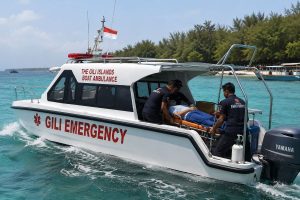
Situations That Commonly Require Emergency Boat Transfers
People imagine extreme accidents when they hear about ambulance boats.
Truth is, many situations are surprisingly ordinary.
Bad dehydration after spending hours in the sun.
Food poisoning.
Motorbike injuries from Lombok travelers continuing their trip to the islands.
Chest pain.
High fever.
Panic attacks after diving.
The Gili Islands boat ambulance handles all kinds of cases, not only dramatic rescues.
Sometimes the transfer itself feels quiet. No sirens. Just quick movement near the harbor while nearby tourists continue drinking coconut water.
Island life keeps going.
That contrast always feels strange somehow.
Diving Emergencies
The Gilis are famous for diving and snorkeling. Turtles everywhere. Clear water. Bright coral.
Beautiful until something goes wrong.
Divers occasionally surface too quickly or ignore early symptoms because they think exhaustion is normal after a dive. Then dizziness appears. Or breathing problems.
That is usually the moment people stop smiling.
In these situations, emergency service Gili providers often coordinate directly with dive operators and clinics before arranging a Gili Islands boat ambulance transfer.
Dive centers generally know the process well.
Which helps.
Panic wastes time.
Night Transfers Feel Different
Nighttime emergencies on the islands feel oddly intense.
Maybe because everything else is so quiet.
Music from beach bars drifts through the air. Waves hit the shore slowly. Then suddenly somebody needs urgent medical help.
Public transport boats usually stop operating late at night, so a Gili Islands boat ambulance becomes one of the only reliable options available.
Honestly, seeing emergency crews move quickly through dark harbors feels unforgettable.
Not scary exactly.
Just very real.
How Gili Medical Service Teams Usually Operate
A lot of travelers think one clinic handles everything from start to finish.
Actually, several groups often work together at the same time.
A Gili medical service provider may first examine the patient at a hotel or dive site. Another team prepares transportation. Clinics communicate with hospitals in Lombok while harbor crews arrange departure.
Good coordination matters almost as much as medical treatment itself.
Without coordination, things become messy fast.
And messy situations are dangerous during emergencies.
The Role of a Gili Medical Clinic
Every Gili medical clinic offers slightly different facilities. Some mainly handle minor injuries or infections. Others provide IV therapy, oxygen treatment, wound care, or emergency stabilization before evacuation.
For tourists, clinics are usually the first place people call during emergencies.
Sometimes medical staff also help contact hotels, insurance companies, or family members.
Honestly, little things suddenly become important when somebody feels scared or confused.
The connection between clinics and the Gili Islands boat ambulance system is what allows emergency response to work smoothly.
Most Tourists Forget Basic Emergency Preparation
People remember sunscreen.
Portable chargers too.
Three swimsuits for a four-day trip.
But emergency contacts?
Usually forgotten.
Maybe because nobody wants to imagine problems before a holiday.
Still, experienced travelers often save contact information for emergency service Gili providers before arriving. Some even ask hotels where the nearest Gili medical clinic is located.
Smart habit, honestly.
Travel insurance matters too.
A surprising number of travelers discover too late that their insurance does not fully cover sea evacuation costs.
Not a fun discovery.
Local Communities Depend on These Boats Too
Tourists are not the only people relying on the Gili Islands boat ambulance.
Local residents use these services as well. Dive instructors. Restaurant workers. Families living permanently on the islands.
Real communities exist behind the tourism scene.
Children grow up there.
Older residents live there.
Pregnant women sometimes need emergency transport.
Medical access matters for everybody, not only visitors.
Sometimes tourists forget that.
Weather Makes Everything Harder
Sea conditions around the Gilis can change quickly.
One hour the water looks perfectly calm.
A few hours later strong waves appear out of nowhere.
Transporting patients safely during rough weather becomes complicated, especially at night. Even experienced crews need to move carefully.
Honestly, it looks stressful.
Communication can become another challenge when frightened travelers struggle to explain symptoms or do not speak Indonesian.
That is why experienced Gili medical service workers matter so much. Calm explanations help people stay focused.
Fear makes situations louder and more confusing.

Choosing Reliable Medical Support
Not every provider offers the same quality.
That is simply reality.
Travelers staying in the Gilis should ask their hotel or dive operator about nearby medical assistance early in the trip instead of waiting until emergencies happen.
Reliable clinics usually work closely with hospitals, harbor teams, and Gili Islands boat ambulance operators.
Quick communication changes everything.
Really.
A trusted Gili medical clinic will generally explain procedures clearly and respond faster during emergencies.
Hopefully nobody needs those services during a vacation.
Still, knowing help exists creates a different feeling of safety around the islands.
The Quiet Side of Emergency Services
There is something oddly emotional about emergency boats crossing dark ocean water.
Maybe because the sea usually represents holidays and freedom.
Then suddenly a Gili Islands boat ambulance cuts through the same water carrying somebody who urgently needs care.
A diver.
A child with fever.
An exhausted traveler.
Somebody’s husband.
Somebody’s best friend.
Meanwhile nearby tourists continue taking sunset pictures or laughing outside beach cafes.
Life keeps moving around emergencies in strange ways.
And honestly, maybe that is why people who work in island medical services deserve more appreciation than they usually receive.
Most visitors never notice the crews, clinics, or emergency workers helping quietly behind the scenes every day.
Which probably means they are doing their jobs well.
