
I wasn’t planning to think about safety that day. Honestly, I was just there for the sun, the water, maybe a lazy swim before dinner. But somehow, in the middle of all that calm, the idea of Gili T marine rescue crossed my mind. Strange timing, I know. Still, it stuck. Because even in a place that feels this relaxed, something like Gili T marine rescue quietly exists in the background, doing its job without asking for attention.
And maybe that’s exactly why it matters.
When Paradise Isn’t Always Perfect
Gili Trawangan has that effortless charm. No engines humming, no traffic stress. Just waves, wind, and the occasional laughter drifting across the beach.
But let’s be real for a second.
The ocean doesn’t always cooperate.
Sometimes the current pulls stronger than expected. Sometimes people swim a bit too far, thinking, “yeah, I’ve got this.” And sometimes… they don’t.
That’s when Gili T marine rescue shifts from being an invisible concept into something very real.
Very needed.
Emergency Service Gili: The First Line of Response
There’s this moment—hard to explain unless you’ve felt it—when fun slowly turns into concern. Maybe your energy drops faster than expected. Maybe you lose track of distance.
It creeps in.
And that’s usually when someone reaches out to emergency service Gili.
What stands out isn’t panic. It’s the opposite. The response tends to be steady, almost controlled in a way that calms the situation before anything else.
They arrive, assess, act.
Simple words. Not always simple in reality.
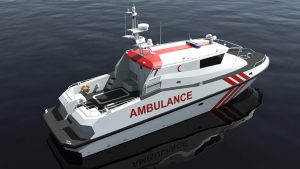
Gili T Marine Rescue Is More Than Just Action
People often imagine rescue as something dramatic. Fast boats, loud urgency, big scenes.
But Gili T marine rescue? It’s not always like that.
A lot of it is quiet work.
Watching conditions. Reading the water. Noticing small changes that most of us would completely miss. Honestly, I wouldn’t even know what to look for.
And maybe that’s the point—you don’t need to.
They do.
The People Who Know the Water
There’s something different about people who’ve spent years around the same stretch of ocean.
They don’t just see waves.
They read them.
The team behind Gili T marine rescue carries that kind of awareness. It’s not just training manuals or procedures—it’s experience layered over time. Repetition. Memory.
And instinct.
A Story That Feels Small—But Isn’t
I once heard about a snorkeler who drifted farther than planned. Not dramatic at first. Just a slow realization: the shore wasn’t getting closer.
They tried to adjust direction.
Didn’t work.
By the time help was contacted, the situation had shifted from “minor inconvenience” to something a bit more serious. Not dangerous yet—but getting there.
Gili T marine rescue responded quickly. Not rushed, just… precise. They located the person and brought them back without much noise or attention.
From the outside, it probably looked routine.
From the inside? Probably not.
The Role of Gili Medical Clinic After Rescue
Getting someone out of the water is one thing.
Making sure they’re actually okay is another.
That’s where a Gili medical clinic comes in. After certain incidents, people are checked—sometimes briefly, sometimes more thoroughly. It depends.
Dehydration is common. So is exhaustion. Occasionally, it’s something more technical, especially with diving-related issues.
The handoff between Gili T marine rescue and medical staff needs to be smooth.
No confusion.
No wasted time.
Gili Emergency Service: The Broader Safety Net
Then there’s Gili emergency service, which supports more than just marine situations. They’re involved in anything urgent across the island.
Accidents, health issues, unexpected incidents.
It’s a network, really.
And Gili T marine rescue is one part of it—an important part, but still connected to something bigger. That connection makes responses faster, more coordinated.
Less chaos. More clarity.
The Waiting Game No One Sees
Most days, nothing happens.
And that’s good.
But behind that calm, Gili T marine rescue teams are still active. Checking equipment. Monitoring weather. Staying alert in a way that probably feels routine to them, but essential in reality.
It’s a lot of waiting.
Quiet waiting.
Because emergencies don’t send warnings ahead of time.
Local Knowledge Changes Everything
This might sound obvious, but it’s worth saying.
Knowing the area matters.
Not just generally—but specifically. Where currents tend to shift. Which spots become tricky during certain tides. How wind patterns affect visibility.
Gili T marine rescue relies on that kind of detail.
It’s not flashy knowledge.
But it’s effective.
Tourists and the Little Things We Overlook
Let’s be honest—most people aren’t thinking about safety all the time while on vacation.
You’re thinking about food, sunsets, maybe your next swim.
And that’s fine.
But small things get overlooked. Distances feel shorter than they are. Energy levels get misjudged. Conditions get underestimated.
That’s usually when Gili T marine rescue becomes involved.
Not because people are reckless.
Just human.
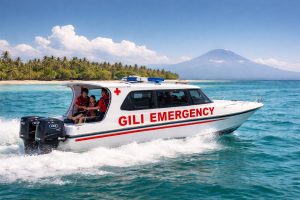
It Rarely Looks Like a Big Deal
One thing that stands out is how subtle most rescues are.
No big scenes.
No loud announcements.
Just a boat moving slightly faster. A quiet exchange between team members. A situation handled before it turns into something noticeable.
That’s how Gili T marine rescue often works.
Efficient. Low-profile.
The Challenges Behind the Scenes
Operating on an island like Gili T isn’t always easy.
Resources are limited. Access to larger hospitals requires transport. Weather doesn’t always cooperate.
And yet, Gili T marine rescue keeps functioning within those constraints.
Adjusting when needed.
Finding ways to make things work.
It’s not perfect.
But it’s reliable.
So Why Think About It At All?
Maybe you don’t need to.
Maybe your entire trip goes smoothly, without a single issue. That’s the ideal scenario.
But still… knowing Gili T marine rescue exists changes something, even if it’s subtle.
It adds a layer of reassurance.
You swim a little more freely. Explore a little further. Not carelessly—but with a bit more confidence.
Because there’s a system in place.
Connected to emergency service Gili, supported by Gili emergency service, and backed by a Gili medical clinic that handles what comes after.
It’s quiet.
Almost invisible.
But important.
And maybe that’s the strange thing about it—you don’t really notice Gili T marine rescue while everything is going well.
Only when something doesn’t.
