
The first time I really thought about Gili Air emergency response, I wasn’t planning to. I was just sitting by the beach, feet half-buried in warm sand, watching the tide slowly come in. Someone nearby mentioned an incident—nothing too dramatic, but enough to make me pause. And suddenly, it hit me… on an island this small, how does help actually work? Where does the ambulance Gili Air come from? Who do you call? That question kind of stayed with me longer than I expected.
Because yeah, paradise is nice.
But things still go wrong.
How Gili Air Emergency Response Adapts to Island Life
Gili Air doesn’t have cars. That’s probably the first thing people notice. No engines roaring past, no traffic jams, none of that noise. Just bikes, footsteps, and the occasional horse cart.
So naturally, Gili Air emergency response doesn’t look like what you’d expect in a city.
No typical ambulance sirens cutting through traffic.
Instead, the ambulance Gili Air system uses small vehicles—sometimes electric carts—that can move through sandy paths and narrow alleys. At first, it feels a bit… unusual. Maybe even slow.
But then you realize something.
There’s no traffic to fight. No red lights. No congestion.
So in a strange way, it balances out.
The First Stop: Gili Medical Clinic
When something happens, most situations are handled by a Gili medical clinic first. These clinics aren’t huge hospitals, but they’re not as basic as people assume either.
I remember stepping into one once. Just curious.
It was quiet. Cool air inside. A faint scent of antiseptic, mixed with something salty drifting in from outside. Not unpleasant. Just… real.
Doctors there deal with a mix of things—minor cuts, dehydration, diving issues, even more serious conditions. The Gili Air emergency response system leans heavily on these clinics as the first point of contact.
And honestly, they do more than you’d think.
When It Gets More Serious
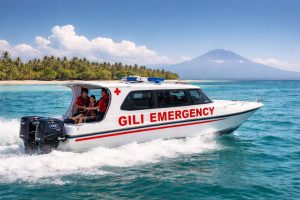
Sometimes, though, the situation goes beyond what a small island can handle.
That’s when Gili Air emergency response shifts gears.
Evacuation becomes necessary.
Usually to Lombok.
This part feels a bit intense, even just imagining it. Boats are arranged, sometimes quickly, depending on the urgency. The Gili emergency service team coordinates everything—timing, transport, basic stabilization before the trip.
There’s no chaos, though.
At least, not the kind you’d expect.
It’s more… focused.
Why People Underestimate Risk Here
Maybe it’s the scenery.
Or the slower pace.
But people tend to let their guard down on Gili Air. I’ve seen it—no helmets while biking, skipping meals, too much sun, not enough water. Small things, but they add up.
And that’s where Gili Air emergency response quietly becomes essential.
Because even minor incidents need attention.
And sometimes minor turns into something else.
Communication Isn’t Always Perfect
This is one part people don’t always think about.
Calling for help.
Signal on the island can be inconsistent. Not terrible, but not always reliable either. So accessing Gili Air emergency response sometimes depends on asking someone nearby.
A hotel staff member. A dive shop. Even a random café.
And oddly enough, that works.
People know what to do.
The island kind of functions as a network, informal but responsive. If you ask around, someone will point you to the right contact, whether it’s ambulance Gili Air or the nearest Gili medical clinic.
What Tourists Expect vs Reality
Let’s be real for a second.
Some visitors expect big-city healthcare everywhere they go. Fully equipped hospitals, instant response times, advanced technology on standby.
Gili Air isn’t that.
And it doesn’t try to be.
The Gili Air emergency response system is built around limitations—space, resources, geography. But within those limits, it works. Not flawlessly, but reliably enough for most situations.
And maybe that’s the key.
Response Time Feels… Different
People often ask how fast help arrives.
It’s a fair question.
But the answer isn’t simple.
Because Gili Air emergency response isn’t about speed in the usual sense. It’s about distance, accessibility, and who’s nearby. If you’re close to a main path, help might arrive surprisingly fast. If you’re further out, it might take a bit longer.
Still, it rarely feels chaotic.
Just steady.
The People Behind the System
This part matters more than systems or equipment.
The people.
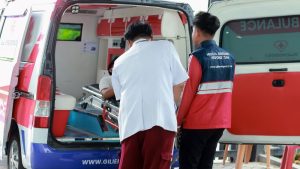
Many of those working in Gili emergency service roles actually live on the island. They know the area. The shortcuts. The quiet corners tourists don’t notice.
And that familiarity changes how they respond.
It feels less like a distant service and more like neighbors stepping in to help.
There’s something reassuring about that.
Small Habits That Make a Big Difference
Not everything needs a full emergency response.
Sometimes it’s just about being a bit more aware.
Drink water. Seriously. The heat sneaks up on you. Watch your step on sandy paths, especially at night. And maybe take a minute to note where the nearest Gili medical clinic is.
Just in case.
It’s simple.
But easy to forget.
A System You Don’t Notice—Until You Do
Most of the time, you won’t see Gili Air emergency response in action.
And that’s kind of the point.
It stays in the background. Quiet. Unobtrusive.
Until something happens.
And then it appears, almost suddenly, already in motion.
No drama. No noise.
Just action.
Final Thoughts on Gili Air Emergency Response
So yeah, Gili Air feels like a place where nothing bad could happen. Calm beaches, slow days, sunsets that make you forget everything else.
But reality is still there, just beneath the surface.
The Gili Air emergency response system—supported by ambulance Gili Air teams, Gili emergency service coordination, and every Gili medical clinic—keeps things running safely in ways most people never think about.
And maybe that’s the best kind of system.
The one you barely notice.
Until the moment you really need it.
