
I didn’t think much about Gili Air call ambulance the first time I arrived here. Honestly, why would I? The sea was calm, the air smelled faintly of salt and grilled fish, and everything felt… easy. Like nothing bad could ever happen.
But then, somewhere between a lazy bike ride and a sunset that looked too perfect to be real, I started wondering. Quietly. What if something did happen?
Not in a dramatic way. Just… life being life.
Why “Gili Air Call Ambulance” Isn’t Just a Phrase
It sounds simple, right? Gili Air call ambulance.
Like you dial a number and help shows up. Done.
But here, it’s a bit different. Not worse. Just different in a way that makes you pause and think.
There are no cars rushing through intersections. No loud sirens cutting through traffic. Just narrow sandy paths, a few bicycles passing by, maybe a horse cart clinking slowly in the distance.
So when people talk about Gili emergency service, what they really mean is a network. A small one. Human-scale.
And somehow… that makes it feel more real.
What Actually Happens When You Call for Help
Let’s say you need to make a Gili Air call ambulance.
First step? Usually contacting a Gili medical clinic.
These clinics are like the heart of emergency response on the island. Not huge hospitals, but they know what they’re doing. They assess the situation quickly—sometimes faster than you’d expect, considering the setting.
Then things start moving.
Not rushing. But moving.
If it’s something minor, they treat it on the spot. Cuts, fevers, dehydration. That kind of thing.
If it’s more serious, they prepare for transfer. And that’s where ambulance Gili Air becomes… a bit more complex.
Because sometimes, the “ambulance” includes a boat.
Yeah. A boat.
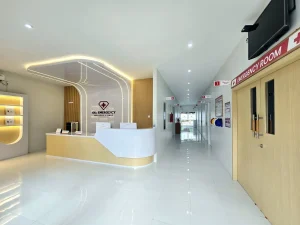
Gili Medical Clinic: Small but Important
There’s something oddly reassuring about these clinics.
You walk in, maybe slightly worried, maybe unsure, and there’s this calm energy. Staff who’ve seen enough to stay composed, but not so overwhelmed that they rush you out the door.
Gili medical clinic services usually cover basic emergencies. They stabilize patients. That’s the key word.
Stabilize first.
Then decide what’s next.
And if needed, they coordinate with facilities in Lombok, where things are more advanced.
When You Shouldn’t Wait
This part matters.
Because sometimes people hesitate. Maybe you would too.
“Is it serious enough?”
“Should I just rest a bit?”
But on an island, time can feel… stretched. And that’s not always a good thing.
If there’s:
- Trouble breathing
- A hard fall or injury
- Sudden loss of consciousness
- Severe allergic reaction
- Anything diving-related
Just go for it. Make that Gili Air call ambulance.
Better early than late. Always.
The Feel of Response Time Here
Let me be honest.
Response time isn’t instant. Not like in a big city.
But it’s not careless either.
It’s just… shaped by the island.
Sometimes help arrives in minutes. Sometimes it takes longer. Maybe the clinic is on the other side. Maybe it’s late at night. And maybe staff are already handling another case.
It’s unpredictable, yes.
But not unreliable.
That’s an important difference.
Ambulance Gili Air: Not What You Expect
If you’re picturing a shiny vehicle with flashing lights, you might need to adjust that image.
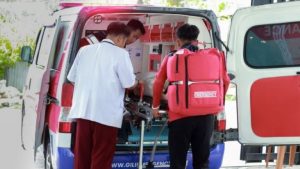
Ambulance Gili Air services are adapted. Practical.
Sometimes it’s a small vehicle built for sandy roads. Sometimes it’s coordinated transport. And in more serious cases, it connects to a boat evacuation toward Lombok.
It’s quieter. Less dramatic.
But it works.
In its own way.
The Cost Side of Things
Not the most fun topic, but let’s not ignore it.
Using Gili emergency service might come with costs. Especially if transport to Lombok is involved.
Boat transfers, medical handling, coordination—it adds up.
This is where travel insurance suddenly feels like the smartest decision you made before the trip.
Without it… things can get complicated. Fast.
A Moment I Still Remember
There was this one afternoon. Hot, but not unbearable.
I was sitting near a small café, watching people pass by slowly. Flip-flops, sunburns, laughter. Normal island life.
Then someone collapsed.
Not dramatic. No shouting.
Just… a shift in energy.
Within minutes, staff from a nearby Gili medical clinic showed up. Calm. Focused. No panic, which honestly made everyone else calmer too.
They checked vitals. Spoke softly. Arranged transport.
And just like that, the situation was under control.
It wasn’t loud.
But it was efficient.
Preparing Yourself (Without Overthinking It)
You don’t need to stress about this.
Really.
But a little preparation goes a long way:
- Save a contact for a Gili medical clinic
- Ask your hotel how Gili emergency service works
- Know roughly where you are on the island
- Keep your insurance info easy to access
That’s it.
Simple things.
But in the moment, they matter more than you’d expect.
Why People Rarely Think About It
Maybe it’s the vibe.
Gili Air has this way of slowing everything down. Your thoughts, your worries, even your sense of urgency.
And that’s beautiful.
But it also makes it easy to forget that emergencies can still happen.
Not often. But enough.
Which is why understanding Gili Air call ambulance isn’t about fear.
It’s about awareness.
The Quiet Safety Net
Here’s the thing I didn’t expect.
Even with limited resources, the island feels… supported.
People help each other. Clinics coordinate quickly. Locals know what to do.
It’s not a perfect system.
But it’s a human one.
And sometimes, that’s enough.
Final Thoughts on Gili Air Call Ambulance
Thinking about Gili Air call ambulance doesn’t ruin the magic of the island.
If anything, it grounds it.
You still get the sunsets. The calm water. The slow mornings.
But you also carry this quiet understanding that if something goes wrong, there is a way forward.
Maybe not the fastest. Maybe not the most high-tech.
But real. And there when you need it.
And somehow, that makes the whole experience feel a little more… complete.
