
There’s something almost ironic about talking safety in a place as relaxed as Gili Trawangan. You arrive thinking about sunsets and snorkeling, not about what could possibly go wrong. And yet, right there between your hotel address and your dive instructor’s contact, there should be one more number saved: the Gili T emergency phone.
Not because you expect drama.
But because travel — especially island travel — has its own rhythm. And sometimes that rhythm skips.
The number is simple: +6282-312-112-112.
Most travelers don’t think about the Gili T emergency phone until something small happens. A deep coral scratch. A sudden fever after too much sun. Food that didn’t sit quite right. Nothing cinematic. Just… uncomfortable. And in those moments, the difference between calm and chaos is often one prepared contact.
I’ve seen it happen. A friend once shrugged off a minor foot cut after snorkeling. “It’s nothing,” he said, rinsing it with bottled water. Two days later, the redness spread. Tropical climates don’t negotiate. They accelerate.
That’s when preparation stops feeling optional.
Why the Gili T Emergency Phone Matters More Than You Think
On a mainland city break, emergencies feel structured. You imagine ambulances, flashing lights, big hospitals. On a small island, things operate differently. No cars. Narrow sandy paths. Horse carts passing quietly in the late afternoon heat.
So when you call the Gili T emergency phone, you’re not activating a giant system. You’re connecting to local responders who understand the terrain intimately — the beach shortcuts, the quickest way to your villa, the nearest emergency clinic.
That familiarity is powerful.
There’s also something reassuring about knowing that Gili medical service teams coordinate directly with the local emergency clinic and Gili medical clinic facilities. They don’t waste time debating where to send you. They already know.
And still… people hesitate before calling. They second-guess. “Maybe it’s not serious.” “Maybe we should wait.”
Waiting feels logical in the moment. Later, it rarely does.
What Actually Happens When You Make the Call?
Let’s remove the mystery.
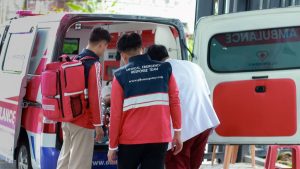
When someone contacts the Gili T emergency phone, trained staff assess the situation immediately. They may guide you through first steps over the line — how to manage bleeding, how to cool someone overheated, how to position a person who feels faint.
Then, if needed, they coordinate transport to a Gili medical clinic or the island’s emergency clinic. In more complex situations, arrangements can be made for transfer to Lombok, where larger hospitals are available.
It sounds procedural when written like this. In reality, it feels more human.
I once watched a small medical team arrive at a guesthouse after a diver experienced severe dehydration. No panic. Just steady voices. Efficient movement. One staff member chatting calmly while preparing fluids. Another checking vitals.
Island medicine is practical. Focused. There’s no room for theatrical urgency — only quiet competence.
And that quiet competence becomes accessible the moment you make the call.
Connectivity Isn’t Always Perfect
Here’s a detail people overlook: Wi-Fi on small islands can be unpredictable.
Power cuts happen. Signals weaken after storms. Sometimes you’re on the beach, far from your hotel’s router, scrolling for answers while your friend looks increasingly unwell.
That’s not the moment to start searching.
Write the Gili T emergency phone somewhere offline if you need to. A notebook. The notes app. Even the back of a receipt tucked into your wallet. It sounds old-fashioned, but in high-stress situations, analog backups feel strangely comforting.
There’s a certain peace in knowing you don’t have to depend on a loading screen.
And yes, this may sound repetitive — save the number, write it down — but repetition sticks. In emergencies, memory doesn’t always cooperate.
Small Island, Specific Risks
Let’s talk honestly about what usually brings visitors to seek help.
Dehydration after long beach days.
Infections from untreated coral cuts.
Motorbike scrapes from day trips across Lombok.
Allergic reactions to seafood.
Ear pressure issues after diving.
None of these are rare. They’re also rarely catastrophic when handled early.
That’s the key word: early.
The tropical heat intensifies minor conditions quickly. Saltwater exposure complicates wounds. Even something as simple as food poisoning can escalate faster than you expect when combined with dehydration.
Calling the Gili T emergency phone early often prevents a manageable issue from becoming something far more disruptive to your holiday.
It’s not about fear. It’s about timing.
Traveling in Groups? Share the Responsibility
Emergencies don’t politely wait until everyone is together.
One friend stays at the villa. Another goes snorkeling. Someone else rents a bike for sunset photos. Then something happens — not dramatic, just inconvenient — and suddenly there’s confusion about who to contact.
Before your trip settles into full relaxation mode, share the Gili T emergency phone with your group. Casually. Over breakfast. No need for a dramatic safety briefing.
“Hey, just in case, here’s the island emergency number.”
That’s it.
Prepared groups move differently. There’s less scrambling. Less anxious guessing. Someone already knows what to do.
And oddly enough, that preparedness makes the holiday feel lighter.

The Psychology of Hesitation
Let me say something slightly uncomfortable: people often wait too long.
They worry about overreacting. They don’t want to “make a big deal.” Especially in a place that feels so calm and idyllic. Calling an emergency line can feel… disruptive.
But medical professionals would rather assess a mild case than respond to a severe one that was ignored.
If you’re unsure, ask. That’s literally what the service is there for.
I remember overhearing a traveler say, “We didn’t want to bother anyone.” The nurse gently replied, “It’s never a bother.”
That sentence stayed with me.
Because hesitation usually comes from good intentions — not wanting to cause trouble. Yet in health matters, decisive action is often the kindest choice for everyone involved.
A Quick Word About Local Medical Support
The island’s Gili medical clinic facilities are accustomed to international travelers. Language barriers are minimal. Staff are used to handling everything from minor injuries to stabilizing patients before transfers.
Gili medical service teams coordinate logistics that tourists rarely see — arranging boats, communicating with mainland hospitals, ensuring documentation is in order. It’s a network that works quietly in the background.
Most of the time, you’ll never interact with it.
But knowing it’s there shifts something internally. You relax deeper. You swim further out and you let your shoulders drop just a little more under the sun.
Preparedness creates space for enjoyment.
One Simple Habit Before You Head Out
Before snorkeling.
>Before that late-night beach gathering under the stars.
Take ten seconds.
Save the number. Double-check it. Maybe even tell one other person where you’ve stored it.
Because when you’re in paradise, the last thing you want is uncertainty layered on top of an already stressful moment.
The Gili T emergency phone exists so your holiday doesn’t unravel over something preventable.
Hopefully, you’ll never dial it.
But if you do — even once — you’ll be grateful it was there, quietly waiting in your contacts, just another small detail that helped keep your island experience exactly what it was meant to be: unforgettable for the right reasons.
