
Most people don’t think about Gili Trawangan medevac when they book a ticket.
They think about sunsets. Beach bars. That slow, almost dreamy rhythm of an island without cars. I did too. The first time I arrived, I remember stepping off the boat and noticing how quiet everything felt. Just bicycles rolling past and the sound of waves folding into the shore.
It felt far from everything.
And that’s exactly the point.
Because when something serious happens, distance suddenly becomes very real. That’s when Gili Trawangan medevac stops being an abstract term and turns into something immediate.
I once saw a diver brought back to shore earlier than expected. No drama at first. Just a tight jaw and controlled breathing. The dive instructor spoke calmly, but quickly. Within minutes, the Gili emergency chain had started moving. Not loudly. Not chaotically. Just efficiently.
It made me realize how much runs quietly in the background of paradise.
Why Gili Trawangan Medevac Exists in the First Place
Gili Trawangan is small. Beautiful, yes. But medically limited.
There are local facilities, including a Gili medical clinic, that handle everyday health concerns very well—cuts, dehydration, mild infections, even stabilizing injuries. For typical travel issues, you’re covered.
But if something crosses a certain line—severe trauma, cardiac symptoms, surgical emergencies—that’s when Gili Trawangan medevac becomes necessary.
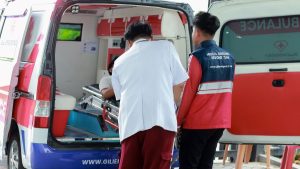
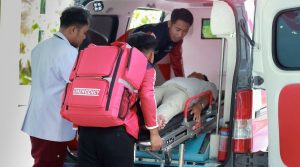
Medevac simply means medical evacuation. On this island, it usually involves a fast boat transfer to Lombok, followed by ambulance transport to a hospital in Mataram. In more critical situations, transfer onward to Bali may happen.
Notice the layers.
Clinic. Boat. Ambulance. Hospital.
Each step matters.
And timing matters more than people expect.
What Triggers a Gili Emergency Evacuation?
Not every injury leads to evacuation. In fact, most don’t.
But patterns exist. Diving incidents are one of them. Gili Trawangan is known for its dive sites, and while operators follow strict safety procedures, decompression sickness is unpredictable. If suspected, rapid access to a hyperbaric chamber is essential—and that capability isn’t directly on the island.
Head injuries from bicycle accidents also happen. The island has no motorized traffic, but that doesn’t eliminate risk. Uneven sand paths. Sudden turns. Distractions.
Then there are medical emergencies that could happen anywhere: appendicitis, severe allergic reactions, heart complications.
When those cases exceed what a Gili medical clinic can safely manage, Gili Trawangan medevac begins.
Sometimes quickly. Sometimes after careful assessment.
There’s a judgment call involved.
The Role of Gili Emergency Service
The Gili emergency service acts as the coordination point. They assess, they stabilize, they communicate with boat operators and mainland hospitals.
I’ve noticed something interesting about how they operate. There’s very little visible panic, even in tense moments. Instructions are short. Direct. Almost quiet.
It feels procedural rather than reactive.
And that calm tone influences everyone around them. Family members breathe a little slower. Bystanders step aside more smoothly. Even the patient often mirrors that steadiness.
Gili Trawangan medevac depends heavily on this coordination. A delay in communication can mean a delay in transfer. So clarity is everything.
It’s less about speed alone and more about synchronized movement.
Weather: The Unseen Variable
This part rarely gets discussed in glossy travel blogs.
The sea decides a lot.
During clear mornings, evacuation boats move swiftly. But late-night storms or strong winds can complicate departure. Not stop it, necessarily. Just slow it.
I remember one evening when clouds rolled in quickly. The dock lights reflected on choppy water, and staff adjusted timing slightly to ensure safe transfer. No one complained. It was simply understood: safety first.
Gili Trawangan medevac during rough conditions requires flexibility. And flexibility requires patience.
That’s why early reporting of symptoms is critical. Waiting until a situation worsens at midnight adds layers of complexity you don’t need.
Insurance: The Conversation People Avoid
Let’s be practical for a moment.
Gili Trawangan medevac is not inexpensive. Fast boat transfers, ambulance coordination, hospital admission—costs accumulate quickly. Air evacuation, if required, increases that dramatically.
Travel insurance with emergency evacuation coverage isn’t just recommended. It’s essential.
I once met a traveler who assumed basic coverage was enough. It wasn’t. The financial stress on top of medical stress made recovery heavier than it needed to be.
Preparation removes one source of pressure.
And when you’re already dealing with uncertainty, reducing pressure matters.
What the Gili Medical Clinic Can Do
It’s important not to underestimate local capability.
Gili medical clinic teams handle dehydration cases efficiently. They manage wound care thoroughly. They stabilize fractures. And they administer oxygen for dive-related symptoms. Early intervention often prevents escalation.
In many cases, Gili Trawangan medevac is avoided because treatment begins quickly.
That’s something worth repeating from another angle: small symptoms addressed early stay small more often.
Waiting, hoping discomfort fades on its own, sometimes shifts a manageable situation into something urgent.
Is it always dramatic? No.
But sometimes the difference is subtle.
The Emotional Shift During an Island Emergency
There’s something about being on a small island when an emergency unfolds. You feel the boundaries more clearly. Water surrounds you. Distance becomes tangible.
Even if help is coordinated efficiently, you become aware of geography in a way you don’t in cities.
I remember standing near the beach path during one evacuation. Tourists moved aside quietly. A few whispered questions. Then life slowly resumed.
Sunset still happened.
That contrast stays with you.
Gili Trawangan medevac exists in that tension between beauty and vulnerability. It doesn’t disrupt the island experience—it supports it.
Setting Realistic Expectations
It’s important to say this clearly: Gili Trawangan medevac works well within island limitations.
It does not operate like a major metropolitan trauma center. Response times depend on sea conditions and coordination logistics. Geography defines the framework.
But within that framework, systems have evolved. Tourism demands reliability. Dive centers conduct safety drills. Communication pathways between Gili emergency service and Lombok hospitals have improved over time.
Most evacuations proceed without complication.
Understanding the context helps maintain calm if timing fluctuates.
Calm helps everyone.
Practical Preparation Before You Arrive
Preparation doesn’t require overthinking.
Confirm evacuation coverage in your insurance policy.
Save Gili emergency contact numbers in your phone.
Locate the nearest Gili medical clinic when you check in.
Inform dive instructors about medical history.
Keep identification documents accessible.
Simple actions.
They take minutes.
But those minutes can make later moments smoother.
A Final Perspective on Gili Trawangan Medevac
When you return home, you probably won’t talk about Gili Trawangan medevac. You’ll talk about turtles, sunsets, and slow mornings with coffee facing the sea.
And that’s exactly how it should be.
Gili Trawangan medevac isn’t meant to dominate your thoughts. It’s a safety structure working quietly behind your experience. It connects the island’s limited facilities with advanced care beyond the shoreline. It supports the Gili emergency response chain and reinforces what the Gili emergency service and Gili medical clinic begin.
Most travelers will never need it.
But knowing it exists changes something subtle inside you. You explore reefs with a little more confidence. You cycle sandy paths with awareness instead of worry.
Prepared, not anxious.
Because Gili Trawangan medevac is not about expecting the worst. It’s about respecting the reality of an island environment while still embracing its beauty.
And somehow, that balance makes the island feel even more extraordinary.
