
You don’t plan for emergencies. They just… happen. And when you’re on a small tropical island like Gili Air, the idea of finding reliable Gili Air emergency help suddenly feels very real. Maybe it’s a scooter fall. A diving incident. Food poisoning at 2 a.m. Whatever the trigger, knowing how Gili Air emergency help works can quietly change your whole travel experience.
If you’re reading this before anything goes wrong, good. That’s smart. Because when you truly need Gili Air emergency help, you won’t want to start Googling in panic mode. You’ll want clarity, you’ll want direction. You’ll want someone to say, “Here’s what to do.” And yes, understanding how Gili Air emergency help operates on a small island without cars or large hospitals makes a difference.
Most travelers assume paradise equals simplicity. But emergencies? They don’t disappear just because the water is turquoise. That’s why learning about Gili Air emergency help ahead of time is not paranoia. It’s preparation. And once you understand how Gili Air emergency help functions—from local clinics to evacuation options—you’ll move through your trip with more ease. Even if you never use it. Especially if you never use it.
Understanding How Emergency Service Works on Gili Air
First, let’s set expectations gently.
Gili Air is small. Beautifully small. No cars, no big hospitals. No flashing ambulance sirens cutting through traffic because… there is no traffic. That’s charming—until someone twists an ankle badly or struggles to breathe after a dive.
The island relies on local emergency service providers and small medical facilities. Response systems here are different from major cities. Transport often involves motorized carts. Severe cases may require transfer to Lombok by boat. And yes, weather sometimes affects that process.
I remember speaking with a dive instructor who once described how they handled a suspected decompression case. Calm voices. Quick coordination. Phone calls to mainland contacts. It wasn’t chaotic—but it wasn’t instant either. That’s the nuance.
Emergency service on Gili Air operates through collaboration: clinics, boat operators, local responders. It’s a web rather than a single dramatic system. And once you see that, you begin to understand how important timing and communication become.

Gili Medical Clinic: The First Line of Care
If something happens, one of the primary places people turn to is Gili medical clinic. It’s not a hospital in the metropolitan sense. But it plays a vital role on the island.
The clinic handles:
-
Minor injuries
-
Dehydration
-
Food poisoning
-
Basic wound care
-
Initial stabilization
Sometimes, it’s enough. Sometimes, it’s the first step before referral to a larger facility in Lombok.
What matters most is speed. Walk in early. Don’t wait. A small infection under tropical heat can escalate faster than you expect. A simple fall on coral can look harmless at sunset—and angry by morning.
Here’s something interesting: many travelers delay seeking help because they don’t want to “ruin the vacation.” I’ve seen it. A surfer insisting it’s just a scratch. A backpacker shrugging off fever.
But here’s the quiet truth—early intervention often prevents bigger disruption. A short clinic visit can mean the difference between one hour of inconvenience and three days of stress.
Gili Medical Service and On-Island Response
Beyond a single clinic, there’s also Gili medical service support that may coordinate transport or urgent assistance. Depending on the situation, they may:
-
Provide on-site response
-
Arrange emergency boat transfers
-
Coordinate with hospitals in Lombok
-
Assist with documentation for insurance
It’s not a dramatic 911-style system. It’s more personal. You call. Someone answers. You explain. There’s a moment of pause while logistics are arranged. And in that pause—you breathe.
I once heard a traveler describe it as “island-speed urgency.” That phrase stuck with me. It’s urgent. But shaped by geography.
And geography matters here.
At night, the sea is darker. During rough weather, transfers may take longer. During peak season, response coordination might involve multiple calls. That doesn’t mean help isn’t coming. It means you’re on an island.
Understanding this before you arrive makes everything feel more grounded.
When Situations Require Evacuation
Now let’s talk about the scenario no one wants to imagine.
Serious trauma. Severe allergic reaction. Diving accident. Cardiac symptoms.
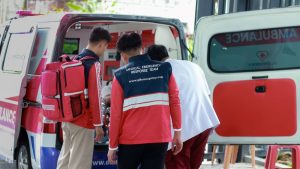
In these cases, Gili Air emergency help often involves evacuation to Lombok, where hospitals have more advanced equipment. Boats are the primary method. In critical conditions, coordination must happen quickly.
Here’s where preparation becomes powerful:
-
Have travel insurance that covers evacuation
-
Save local emergency contacts in your phone
-
Inform companions about allergies or conditions
-
Know your accommodation’s location clearly
Tiny detail—but helpful: many paths on Gili Air are sand or uneven stone. Transport carts can move, but not at high speed. So proximity to the harbor can sometimes matter more than people realize.
You don’t need to be anxious about this. Just aware.
Awareness creates calm.
Small Observations Travelers Often Miss
Let me share a few quiet things people rarely talk about:
Hydration is not optional here. Tropical sun plus scooter rides plus cocktails? That combination can sneak up on you.
Coral cuts look small but can infect quickly in humid climates.
Scooter accidents—yes, even at slow speed—are common among visitors who aren’t used to sandy paths.
And sometimes, panic itself becomes the emergency.
There’s something about being far from home that amplifies fear. A fever feels scarier. A fall feels more dramatic. The distance from familiar hospitals makes everything louder in your mind.
But here’s the grounding part: Gili Air handles emergencies regularly. Dive schools train for them. Clinics expect them. Boat transfers are not rare events.
It’s not chaos. It’s rhythm.
Why Knowing About Gili Air Emergency Help Changes Your Trip
You might think researching Gili Air emergency help is pessimistic.
It’s actually freeing.
When you understand what exists—emergency service options, Gili medical clinic support, Gili medical service coordination—you stop imagining worst-case scenarios. You replace vague fear with structure.
And structure reduces anxiety.
I’ve met travelers who said they relaxed more after simply saving clinic numbers in their phone. They never used them. But the act itself created peace.
It’s like carrying a small umbrella on a cloudy day. You may not need it. But you walk differently knowing it’s there.

Practical Steps Before You Travel
Let’s slow this down and make it tangible.
Before arriving on Gili Air:
-
Purchase travel insurance with evacuation coverage
-
Screenshot contact details of Gili medical clinic
-
Share your itinerary with someone back home
-
Bring any necessary medications
-
Inform your dive operator of medical conditions
Simple steps. Nothing dramatic.
And once you’re there? Notice your surroundings. Walk carefully at night. Stay hydrated. Respect the ocean. Listen to your body.
If something feels wrong, act early.
Not urgently. Just early.
There’s a difference.
The Emotional Side of Emergencies Abroad
We don’t talk about this enough.
Being sick or injured in a foreign place can feel isolating. Even if the medical response is competent, the emotional layer hits differently.
Language differences. Cultural differences. The smell of antiseptic in a room that doesn’t feel like your usual clinic. It lingers in memory.
But here’s something reassuring: island communities tend to respond with empathy. It’s smaller. More human. Staff often know each other. Coordination feels personal.
It’s not a massive hospital corridor. It’s conversation. Eye contact. A hand gesture explaining the next step.
Sometimes slower. Sometimes improvised. But human.
And that humanity matters.
Final Thoughts on Gili Air Emergency Help
Planning for Gili Air emergency help doesn’t mean expecting disaster. It means traveling wisely. When you understand how emergency service operates, where Gili medical clinic fits in, and how Gili medical service supports evacuation if needed, you shift from uncertainty to quiet confidence.
Will you likely need it? Probably not.
But if you do, you’ll be ready.
And that readiness changes how you breathe when you step off the boat. It changes how you explore coral reefs. It changes how you ride that bicycle at sunset.
Because now you know.
Gili Air emergency help exists. It’s structured differently from a big city system, yes—but it functions. It responds. It adapts to island realities.
And sometimes, simply knowing that is enough to let you fully enjoy paradise.
